Support This Website! Shop Here!

Thursday, October 13, 2016

Catholics and American Politics


"Are you a Democrat, Republican or Independent?"
"Oh, none of the above."
"Excuse me?"
"I said, 'None of the above. I am Catholic.'"

Anti-Catholic Bigotry: A Proud History

Catholics have an odd political history. The Catholic outlook does not fit any particular American political movement, which is why Catholics have long been considered politically suspect. Everyone remembers the Democrat party invented the KKK to suppress the black vote, but few recall that it also suppressed the Catholics and the Jews. In fact, the largest lynching in the history of the American south was not a mass lynching of blacks, but of Catholics - in 1891, eleven Italian-Americans were lynched for allegedly killing a police officer.

Similarly, the national Know Nothing party was founded exactly one year after the Republican party, and the two had close ties. The Know Nothings were famously and virulently anti-Catholic. The Know-Nothing penchant for violence is perhaps best remembered in the success of a local chapter in burning down an Ursuline Convent in 1834, Almost exactly twenty years later, they destroyed a marble block donated by the Pope for use in the construction of the Washington Monument, The Know-Nothings "kidnapped" the block and threw it into the Potomac to keep Washington's Monument free of "popish" influences.

Modern Bigots: Clinton/Trump

Whether Democrat or Republican, political advancement in America has long been tied to displaying one's anti-Catholic credentials to a frequently bloodthirsty audience. Thus, it is no surprise to see Trump's hypocritical attack the Pope (to see Trump's complete statement, go here): 


Of course, the Pope did not question Trump's faith. In fact, the Pope publicly refused to believe that Trump was as bad as the press portrayed him, and publicly chastised the press for portraying him that way. The only way one could construe the papal remarks as an attack on Trump's faith is by assuming the reporter's caricature of Trump's faith was not a caricature at all, but rather absolutely accurate. In fact, the Pope did not confirm the caricature, on the contrary, he specifically questioned the accuracy of the reporter's caricature.

So, why did Trump respond so viciously, pretending he had been attacked when Pope Francis had actually questioned the reporter's veracity?  Trump responded that way precisely because Trump knows what all politicians know - in certain circles, you get more mileage for attacking the Pope than for agreeing with him.

Now Hillary Clinton is on the dock because the highest members of her staff had virulently anti-Catholic conversations, with the following documented example demonstrating the bias:
“It’s [i.e., Catholicism is] an amazing bastardization of the faith. They must be attracted to the systematic thought and severely backwards gender relations and must be totally unaware of Christian democracy,” Mr. Halpin said.
“I imagine they think it is the most socially acceptable politically conservative religion. Their rich friends wouldn’t understand if they become evangelicals,” Ms. Palmieri responded.
“Excellent point,” Mr. Halpin wrote back. “They can throw around ‘Thomistic’ thought and ‘subsidiarity’ and sound sophisticated because no one knows what the hell they’re talking about.”
Actually, Catholics expect a well-educated person to be familiar with basic terms like "subsidiarity" and "Thomistic thought". Every politician claims to be well-educated. Clinton's emails demonstrate that Clinton's "best" people function at or below the educational level usually attributed to Trump supporters.

In General, What Does a Catholic Stand For?

An excellent question. For Catholics, Faith comes before country. We have a duty to Christ that supersedes any duty to secular authority. If it is a choice between obeying God and man, we obey God. Still, as Scripture says, we must also acknowledge that our leaders have power only because God permits them to, thus we are called to work within the law whenever possible.

Responsibility should be shouldered at the lowest possible level - the players at the lowest level of society, e.g., parents, teachers, etc., the people out on the street, doing the work, these are the people who should have the greatest voice in a process. Higher levels of authority exist not to rule over those in the street, but to help allocate resources so that those who know the problem best have what they need to resolve the problem. This is called the "principle of subsidiarity."

Since revolution, especially armed revolution, disrupts society, such movements always harm innocents, Acting with this in mind, Catholics are required to avoid fomenting rebellion or revolution if it can possibly be avoided. We are required to work within the system, not subvert it. These political principles, and many more, were clearly explained by Thomas Aquinas. In fact, Catholic political principles are drawn largely from his clear, logical analysis, analysis which summarized how human and divine action should interact. His summaries of political and theological principles are together known as "Thomistic" thought.

Catholics on Specific Issues

So, can some major principles, as regards America's culture, be enunciated?
Yes.

Quasi-Democrat principle
All people have the right to attempt to better their lives, so immigration must be as free as possible. Vatican City models this principle by not even having a passport check on its border with Italy. Anyone can freely enter the country at any time, and many of Italy's homeless take advantage of that fact every night, walking across the Vatican City border for shelter and food.

Quasi-Republican principle
That having been said, insofar as those laws are just, and do not violate human rights, immigrants have a duty to obey the laws of their host country

Quasi-Democrat principle
Everyone has the right to live their life as they think best, according to the primacy of a well-formed conscience.

Quasi-Republican principle
However, for anyone's actions to be acceptable, their conscience must be "well-formed." The state has every right to restrict actions which someone freely undertakes, but which would not pass the test of a well-formed conscience.

Quasi-Democrat principle
We all have a duty to care for the poor. This duty is bound by the principle of subsidiarity, that is, the poor should be taken care of by local organizations, not far-away government agencies. HOWEVER, higher organizations, such as city, county, state and federal government, have a duty to assist those local organizations. The government's duty towards those local organizations includes the duty to provide necessary resources, such as funding.

Quasi-Republican principle
Innocent life is always to be preserved, so crimes against innocent persons can never, under any circumstances, be justified. Thus, all forms of deliberate abortion, euthanasia, etc., must be illegal. There can be no exceptions. Period.

No. Really. Period. Done.

Quasi-Democrat principle:
While the state has the right to exercise the death penalty, that penalty should not be used if it can possibly be avoided. God is the giver of life. Since a criminal is one who makes war on the state and its citizens, we have to use the same principles in applying the death penalty that we use in the application of "just war." If we apply those principles, it is impossible to justify the death penalty in most cases.

Quasi-Republican principle
Marriage exists not only for the good of the spouses, but also for the good of procreating children. It follows both that (a) children have a right to grow up with their biological parents, and (b) parents have a duty to raise their children. For these and other reasons, homosexual "marriage" is a contradiction in terms.

Both parties like this:
It is legitimate to wage war, but only according to the principles of just war. Democrats got America into most of the last century's worth of wars, and Republicans have made sure the American war machine stayed funded. Both parties benefit from war. Unfortunately, neither party has ever shown great interest in restricting themselves to waging a just war.

Both parties hate this:
Contraception is an intrinsic evil and should not be permitted. However, contraception does not always directly take innocent life. As both St. Augustine and St. Thomas point out, in cases like this, the state may permit one evil in order to avoid a larger evil. For instance, the state may permit prostitution in order to avoid a greater violence. Since, as even Mahatma Gandhi recognized, contraception turns a woman into a prostitute, the state might permit legal contraception (i.e., legal prostitution) in order to avoid some other evil. Both of America's political parties want legal contraception, but they don't want anyone pointing out that they have thereby turned women into prostitutes.

Both parties SAY they like this, but both actually hate it:
Women must be respected.

Making contraception available turns them into prostitutes. Making abortion available turns them into accomplices to murder. Treating women like exchangeable prostitutes by engaging in serial divorce and re-marriage is likewise not respectful. Treating the vocation of mother as a trash job for someone too incompetent to make it in the business world is not respectful. Pretending that "male" and "female" are simply social constructs is not respectful. Electing politicians who treat the women around them in this way (all previous presidents in the last century except, perhaps, George W. Bush, please call your office. Hillary, get out from under the smears and coverups you have committed against your husband's rape victims and pick up the phone - this includes you.) is not respectful.


Conclusion


This is why Catholics hate both Trump and Clinton. Both candidates violate very basic principles of Catholic Faith. Hillary is the worst offender, because she calls for the murder of children. Trump is barely above her, for he calls for committing war crimes against innocent civilian families. But numerous additional violations in any number of subjects could be piled on.

America used to produce candidates who at least publicly pretended to stand behind principles that were recognizably Catholic. Today, both major parties have surrendered these principles. Catholics have no viable major party choice. Even Gary Johnson, of the Libertarian Party, essentially matches Hillary in his/her "murder-for-hire" attitude towards children.

Catholics have to get our heads around this fact: Barack Obama is correct.

With the 2016 presidential candidates, it is now clear we are no longer a Christian country.
Catholics do not now, and will not soon, have a viable presidential candidate to vote for. We have been, and will continue for the foreseeable future to be, living in Churchill's Wilderness Years. We simply cannot expect to see a viable candidate that Catholics can morally support for a long, long time.

Wednesday, October 12, 2016

Bye-Bye Miss American Pie


Not like the brazen giant of Greek fame,
With conquering limbs astride from land to land;
Here at our sea-washed, sunset gates shall stand
A mighty woman with a torch, whose flame
Is the imprisoned lightning, and her name
Mother of Exiles. From her beacon-hand
Glows world-wide welcome; her mild eyes command
The air-bridged harbor that twin cities frame.

"Keep, ancient lands, your storied pomp!" cries she
With silent lips. "Give me your tired, your poor,
Your huddled masses yearning to breathe free,
The wretched refuse of your teeming shore.
Send these, the homeless, tempest-tost to me,
I lift my lamp beside the golden door!"


"What?!?!"

"Oh, screw that. Put up a wall, and send us only your very best, the ones who can really help turn a buck for us. You keep the wretched refuse on your teeming shore, we'll skim the cream off the top."


America... I don't know you anymore.... 

Thursday, October 06, 2016

Pastors: Stop Complaining

Some Catholic pastors are whining that their congregations treat them badly.
Boo.
Hoo.

You wanted involvement from the laity.
You got it.
Stop complaining.

The Second Vatican Council asked for the laity to get more involved. The Council did NOT mandate that the laity agree with all the priest's/bishop's decisions, nor did it assert that one side or the other would always be right in how they acted.

Priests and bishops model behaviour to the congregation. If priests and bishops abuse the liturgy, then the laity see and understand the basic principle: abuse is acceptable! Thus, the congregation abuses the priests and bishops.

If priests and bishops question the Magisterium's authority, if they pick and choose which teachings of the Church they will endorse, if they cast aspersions on the Pope from the ambo, then the congregation will question the priest's and bishop's authority. The congregation will pick and choose which pronouncements of the pastor they will honor, the congregation will cast aspersions (or make Youtube videos) of the pastor and the bishop and post those on the Internet.

That's how life works.
With ubiquitous video recording devices, what goes around will come around with a vengeance.

The sheep drink from the same stream as the shepherd.
Shepherds should keep that in mind when they choose their streams.

If the pastor doesn't like how the congregation acts, it's because he can't stand looking at his face in the morning mirror. You want an obedient, respectful flock? Be obedient and respectful to the Church. If you aren't, then devil will take the hindmost, and that might well be you.

Wednesday, September 28, 2016

Voting and the Moral Act

When we say "voting is a moral act," we have to define our terms. The "moral act" means different things depending on what philosophy you espouse and how you define morals. Notice that "morality" is not the same as "ethics." Morality is a divinely revealed code of conduct. Ethics is a humanly agreed upon code of conduct. There is overlap between the two, but the two are not identical. I can do something that is moral, but unethical, and I can do something that is ethical, but immoral.

Take the example of the doctor who sleeps with his patient. Immoral? Unethical? Both? Neither? We can't tell from just the example. If the doctor's patient is his wife, then the act is perfectly moral, but it might be unethical if his particular specialty (for example, surgery) requires that doctors not accept close relatives as patients. On the other hand, if the patient is NOT his wife, the act is certainly immoral, but might be ethical because his particular specialty (for example, podiatry) lays no specific prohibitions on doctors having emotional relationships with patients.

So, if we accept that morality is a divinely revealed code of conduct, then the moral act, at least in Christian tradition, is made up of three elements: circumstances, intention and the act itself. Notice that the outcome is most definitely NOT part of the moral act. Again, in Christian tradition, God is the one who brings about the outcome, not man. Man proposes, God disposes. We do our best, but our best is not expected to be good enough to always accomplish our intention.

And so it is with voting. When we vote, we are not responsible for the outcome. Whether the person for whom we vote wins or loses is not our concern. We vote (act) for the candidates who fulfill the legal requirements of office (circumstance) with the intention of placing them in office. Whether they actually make it into the office, or even have a chance to make it into office, is not relevant to the morality of the act, which is my vote. As long as I vote with the intention that my vote helps this person get into office, I have provided the third element of the moral act.

In order for a vote to be a morally good act, all three elements have to be good, or at least morally neutral. For example, I have no right to intend to put an unqualified person into office. An unqualified person is not just someone who doesn't satisfy the laws of the state concerning the office. After all, a person may fit the secular qualifications (correct age, mental capacity, etc.), but still be unfit because that person is known to be morally unqualified. Perhaps he abuses power, perhaps he regularly and without remorse uses power to injure and/or kill others. Such a person is not worthy of my vote.

Now, I am aware that my vote is one out of hundreds of millions cast. There is simply no reasonable probability that my vote alone will actually put anyone into office or prevent anyone from taking office. Given the number of votes cast, my vote has essentially zero effect on the outcome of any election. In fact, as we have seen, even if it were otherwise, even if I were reasonably certain that my vote would accomplish my intention, the placement of a specific person into a specific office as a result of my vote would be an outcome, and outcome isn't part of the moral equation.

So, when I vote, I don't vote in order THAT someone may win. Rather, I vote in order to express the idea that this person is someone I know well enough and I trust well enough to act correctly while they are in office (whether they get that office or not). My vote is a statement about how much I trust another person, a statement that asserts the office-seeker's values are close enough to my own that I have good reason to believe he will serve others well while in office.

It is only in THAT sense that my vote is a moral act. My vote is a short-hand letter of reference. I don't look at the office-seeker and say "Well, he's not as bad as the others, and someone has to do the job, so I suppose he will have to do." Rather, I look at the office seeker on his own, without reference to the other office-seekers. Based on the assessment I make of this seeker alone, I determine if I know him well enough and trust him well enough to endow him with the power of the office.

This is the important part: If none of the office seekers are trustworthy enough, then none of them get my vote.

If voting is a moral act, then my vote is my personal moral statement.
That is all it is - it can be no more.
But neither can it be any less.

As a Catholic, I have a duty to make publicly clear that I am Catholic. If I can do that by voting for a particular candidate, thereby declaring that this candidate's values match true, substantial Catholic values, then I am bound to vote for the candidate. I cannot not vote for him. However, if I cannot find a candidate whose values are substantially Catholic, if I see all the candidates have values that substantially violate Catholic faith, then I am duty-bound not to vote, I am duty-bound NOT to endorse them with my vote. I am duty-bound NOT to contribute to handing them the power of office.

I do not have to choose between Lenin and Stalin, between Pol Pot and Mao tse Tung, between Goehring and Hitler. If these are the choices, then the Catholic thing to do is to imitate St. Thomas More, retire to my estate and refuse to make any public endorsement of anyone.

If I predicate my vote on what the outcome will be, I am playing God. I have, at that moment, become a consequentialist, a modernist, a fool. I am representing to myself that I have control over outcomes that I do not, in fact, have any control over at all. By the very fact that I already know my vote will not, and never can, be the single deciding vote in an election involving 330 million people, then pretending my vote is necessary for a specific outcome is farce. It is just me trying to convince myself that a dreamworld is reality, that my vote means more than it actually does. I represent myself as having more power than I could ever, even in the wildest reality, actually wield.

The choice in 2016 is between Lenin and Stalin, between Pol Pot and Mao tse Tung, between Goehring and Hitler. Thus, for the time being, I retire.

Monday, September 12, 2016

Just A Mild Case of Pneumonia?!


On Sunday, 68-year old Hillary Clinton collapsed from what her handlers claim was a case of pneumonia that was diagnosed on Friday. Despite video which clearly shows her essentially unconscious as she is being dragged into her van, she was not taken to a hospital.

Instead, 90 minutes after she was taken to her daughter's apartment (!), she was out on the sidewalk, bending over and greeting a small child. This is amazing, given that pneumonia causes low oxygen saturation in the blood, increases the probability of dizziness while standing or bending over, and therefore increases the risks of falls.


An elderly patient who has just collapsed from pneumonia will not be bending over to greet a small child. This sequence of events does not comport with pneumonia. Below are some medical website quotes about pneumonia in the >65 crowd. Links are at the beginning of the paragraphs:
A number of studies have confirmed that there is a high rate of morbidity and mortality associated with pneumonia in the elderly (Fig. 1).[1-5] These high rates have continued to impede the efforts of healthcare professionals, despite significant improvements in therapeutic options and public health practices. One-sixth of the six million pneumonia cases that are reported each year occur primarily in those individuals 65 years and older requiring hospitalization for pneumonia.[6] Over 90% of all deaths from pneumonia occur in this older population.
Community-acquired pneumonia is one of the most common reasons for admission to a general intensive care unit (ICU). Up to 22% of patients hospitalized with pneumonia are admitted to the ICU,[3–5] approximately 18–56% of whom will die during hospitalization. Appropriate delivery of critical care services for patients with pneumonia is particularly topical and important given how common community-acquired pneumonia is in elderly patients, with approximately one million cases per year in those ≥65 yrs in the United States.
Older people have higher risk of getting pneumonia, and are more likely to die from it if they do. For US seniors, hospitalization for pneumonia has a greater risk of death compared to any of the other top 10 reasons for hospitalization.
While successful pneumonia treatment often leads to full recovery, it can have longer term consequences. Children who survive pneumonia have increased risk for chronic lung diseases. Adults who survive pneumonia may have worsened exercise ability, Cardiovascular disease, cognitive decline, and quality of life for months or years. (emphasis added)
The pneumonia and influenza mortality rate is much higher for those aged 65 years and older compared to younger age groups. About 85 percent of all pneumonia and influenza deaths occur in this age group, and it represents the seventh leading cause of death in this age group.
Her people didn't seem to be very upset about her "pneumonia", nor did they treat it with very much concern. They certainly did not exhibit the level of concern that would be warranted if this were a recently diagnosed condition that had just rendered their candidate unconscious. And how does someone recover in 90 minutes from that level of incapacitation, especially if it were induced by pneumonia? How does a 68-year old woman manage that? Receiving no apparent medical care during or after the episode? Seriously?
Whatever Hillary has, it is:
  • deeply debilitating (obvious from the first video)
  • rapid onset with "halo" (victim can feel upcoming episode, thus she made it to the van)
  • transient (obvious from the second video)
There are a lot of things that can do that.
Pneumonia isn't one of them.

Saturday, September 10, 2016

Aquinas and the Immaculate Conception

It is often said that Aquinas denied the Immaculate Conception, the fact that Mary was conceived without sin. This is incorrect.

Thomas built a theory of sanctification that assumed an underlying scientific understanding of conception and ensoulment that happened to be in error, but was common throughout all the centuries preceding his own.

No one knew that women produced eggs, and this knowledge would not, in fact, be confirmed until the early 1800s. Since all things are created in, by and for Christ, the operations of the natural world are properly a subject of theology. Further, since God took flesh and walked in the natural world, the operations of the natural world are also part of the necessary foundation to Christian theology.

Unfortunately for Thomas, none of the Christian theologians had a detailed or complete understanding of how conception worked. Thomas assumed that conception happened first, and the rational soul was infused at some later point. This was an error. Despite this error he pointed out an incontrovertible fact:
"The sanctification of the Blessed Virgin cannot be understood as having taken place before animation, for two reasons. First, because the sanctification of which we are speaking, is nothing but the cleansing from original sin: for sanctification is a "perfect cleansing," as Dionysius says (Div. Nom. xii). Now sin cannot be taken away except by grace, the subject of which is the rational creature alone. Therefore before the infusion of the rational soul, the Blessed Virgin was not sanctified.
Secondly, because, since the rational creature alone can be the subject of sin; before the infusion of the rational soul, the offspring conceived is not liable to sin. And thus, in whatever manner the Blessed Virgin would have been sanctified before animation, she could never have incurred the stain of original sin..."  (emphasis added)
All he said was, the Blessed Virgin HAD to have been saved from original sin or Christ would not be universal saviour - a perfectly correct statement:
"If the soul of the Blessed Virgin had never incurred the stain of original sin, this would be derogatory to the dignity of Christ, by reason of His being the universal Saviour of all. Consequently after Christ, who, as the universal Saviour of all, needed not to be saved, the purity of the Blessed Virgin holds the highest place."
And he even admitted that celebrating the Feast of the Immaculate Conception was not a problem:
"Although the Church of Rome does not celebrate the Conception of the Blessed Virgin, yet it tolerates the custom of certain churches that do keep that feast, wherefore this is not to be entirely reprobated. Nevertheless the celebration of this feast does not give us to understand that she was holy in her conception. But since it is not known when she was sanctified, the feast of her Sanctification, rather than the feast of her Conception, is kept on the day of her conception." (emphasis added)
So, he essentially admits that if his understanding of how ensoulment works is wrong, then the Immaculate Conception was properly a feast. He even admitted that his theory could be wrong when he agreed that the Feast of the Immaculate Conception could be licitly celebrated, since no one knew exactly when she had been sanctified. The reason no one knew was because no one knew exactly when the rational soul was infused.

He did not deny the Immaculate Conception, he only denied that Mary could have been sanctified before the infusion of her rational soul - a perfectly reasonable theological position. We don't baptize dogs because dogs don't have rational souls. We don't sacramentally anoint chairs or tables because they don't have souls at all.

If Thomas had known the infusion of the rational soul took place at conception - which is what the dogma of the Immaculate Conception implies - he would have instantly agreed that the Immaculate Conception was a reasonable teaching:

Since he merely proposed a theory of sanctification, and since he agreed that the liturgy of the Church was of more importance than his theory, he did not teach error regarding the Immaculate Conception. Instead, he showed the proper humility towards the Magisterium which is so often lacking in Christians today.

Catholic Truth in Other Religions

For reasons beyond my ken, the memes and quotes below have been popping up in my newsfeed. These quotes do not mean what many Catholics think they mean.


“Further, whilst Jesus was kind to sinners and to those who went astray, He did not respect their false ideas, however sincere they might have appeared. He loved them all, but He instructed them in order to convert them and save them. Whilst He called to Himself in order to comfort them, those who toiled and suffered, it was not to preach to them the jealousy of a chimerical equality. Whilst He lifted up the lowly, it was not to instill in them the sentiment of a dignity independent from, and rebellious against, the duty of obedience. Whilst His heart overflowed with gentleness for the souls of good-will, He could also arm Himself with holy indignation against the profaners of the House of God, against the wretched men who scandalized the little ones, against the authorities who crush the people with the weight of heavy burdens without putting out a hand to lift them.” ~ Pope St. Pius X, Encyclical Notre Charge Apostolique, 1910:
The Magisterium cannot be broken. Whether we are discussing papal decrees, conciliar decrees or Scripture, we need to spend a long time thinking about how to reconcile all the different statements of the Magisterium so they do not contradict one another.

While composing the Summa Theologica, the greatest non-Scriptural work the Church has ever produced, St. Thomas Aquinas reportedly spent hours in contemplation before the Blessed Sacrament, sometimes beating his head against the floor in frustration as he tried to work out how to reconcile all the different statements in the Magisterium.

If this were easy, If the Catholic Faith could be meme'd this way, if statements could be taken at face value without any deeper contemplation, we wouldn't need Fathers or Doctors of the Church. As it is, we do.

Every religion is attractive to men ONLY because every religion has some seed of truth. Since God is Truth, insofar as any system has some seed of truth, that seed of truth is a reflection of God's glory and therefore must be respected to at least that degree.

That is a fact.
None of the facts represented in this article are in contradiction.
All of the facts in this article must be read in such a way that they do not contradict.
Only when you have succeeded in doing that can you say that you have arrived at Catholic Truth.

Thursday, September 01, 2016

What Went Wrong At Baltimore?

Traditionalist Catholics who don't know very much about Catholic faith (such as this man) tend to set great store by the Baltimore Catechism (BC). The more ignorant the traditionalist, the greater their love of the BC. Oddly enough, the Baltimore Catechism is arguably a prime example of how American Catholics, raised in the TLM tradition, never really understood the Faith. It is a shining example of the pre-Vatican II rot that the council was trying to repair.

To understand just how bad the Baltimore Catechism truly is, consider the issue of "mixed marriages", that is, marriages between Catholics and non-Catholics. The Bible minces no words on the subject:
Wives, in the same way submit yourselves to your own husbands so that, if any of them do not believe the word, they may be won over without words by the behavior of their wives, (1 Peter 3:1)
For the unbelieving husband has been sanctified through his wife, and the unbelieving wife has been sanctified through her believing husband. Otherwise your children would be unclean, but as it is, they are holy. (1 Corinthians 7:14)
The early Church had no fear of the pagans. Every Catholic knew the Faith so well that each believer was expected to convert his or her unbelieving spouse. But how things change in just a couple of millennia! This is the BC's fear-filled command:
Q. 1327. Which are the chief commandments of the Church?
A. The chief commandments of the Church are six:
      ......
      ......
6. Not to marry persons who are not Catholics...  (Baltimore Catechism)
By the time the American Catholic bishops approached the problem, they recognized that they had stunk so badly at catechizing the faithful, and the faithful had stunk so badly at being catechized, that neither the ordained clergy nor their flock could risk associating themselves with non-Catholics, even via sacramental bonds. That is, the American bishops and their flocks didn't think even the saving graces of the sacrament of marriage, image of Christ's bond with the Church, would be sufficient to protect the Catholic from apostasy, much less convert the unbeliever.

Yes, in a battle in which the salvific graces of the Bridegroom contest with the pagan heresies of the unbeliever, the gates of Heaven could not be trusted to prevail. That's the Baltimore Catechism for you.

Now, anyone who has spent any time at all studying the precepts of the Church know that those precepts have changed wildly depending on geography and time period.
The Church in her supreme authority has defined nothing regarding the form and number of the Commandments of the Church (emphasis added). The Council of Trent while recommending in a general way in its twenty-fifth session the observance of these precepts says nothing regarding them as a particular body of laws. Neither is any specific mention made of them in the "Catechismus ad parochos" published by order of the council and known as the "Catechism of the Council of Trent" or "Roman Catechism". We have seen that St. Antoninus of Florence enumerates ten such commandments while Martin Aspilcueta mentions only five. This last number is that given by St. Peter Canisius. According to this author the precepts of the Church are: To observe the feast days appointed by the Church; to hear Mass reverently on these feast days; to observe the fasts on the days during the seasons appointed; to confess to one's pastor annually; to receive Holy Communion at least once a year and that around the feast of Easter. 
 It will be readily observed that the omission by French writers of the Commandment to pay tithes was owing to local conditions. In a "Catechism of Christian Doctrine" approved by Cardinal Vaughan and the bishops of England, six Commandments of the Church are enumerated. These are:
  • to keep the Sundays and Holy Days of obligation holy, by hearing Mass and resting from servile work;
  • to keep the days of fasting and abstinence appointed by the Church;
  • to go to confession at least once a year;
  • to receive the Blessed Sacrament at least once a year and that at Easter or thereabouts;
  • to contribute to the support of our pastors;
  • not to marry within a certain degree of kindred nor to solemnize marriage at the forbidden times.
This list is the same (????) as that which the Fathers of the Third Plenary Council of Baltimore (1886) prescribed for the United States. (question marks and emphasis added)
Read that last precept, as presented by the Catholic Encyclopedia, again. Notice what is missing. Notice how the encyclopedia's version of the precept doesn't say a word about not marrying the unbeliever. In fact, you can read the entire encyclopedia article and you would search in vain for the BC's "mixed marriage" precept in ANY of the provided lists, all written by saints and Doctors of the Church. This all the more striking when one considers how little love the Catholic Encyclopedia's own article on mixed marriage exhibits.

Now, one could argue that this entire article is but an argument from silence. But that is precisely the point. The precepts of the Church have never been put under double-secret probation. The whole purpose of the precepts are to make quite clear and quite well-known bedrock ecclesial principles. If something is not listed as a precept of the Church in any list by any father, Doctor, saint or council of the Church, then it isn't a precept of the Church, no matter how much some random lay person, priest or even individual bishop might wish it to be.

So, according to the Catholic Encyclopedia, the Baltimore Catechism did not just back away from the idea that Catholics should evangelize everyone concerning the Faith, even their own spouses. It would be bad enough if this were true, but it is worse. Instead, again, according to the Catholic Encyclopedia, the Baltimore Catechism actively misrepresented the Third Plenary Council's summary of the Church's precepts. 

The Baltimore Catechism has many faults.
  • It is not logically structured, it does not begin with the Trinity as Aquinas did, but is instead structured almost haphazardly. 
  • It is a question-answer catechism that consciously imitates Protestant catechetical methods (few today realize that Martin Luther's 1529 Small Catechism was the first question-answer catechism in history). 
  • It is a catechism that teaches the sacraments in the wrong order, placing Confirmation after First Eucharist when all Magisterial documents clearly show the order of sacramental initiation is baptism, confirmation, Eucharist. 
  • It is a catechism that is meant to teach only small children, but continues to be sought out by adults who have clearly never gotten beyond a child's understanding of the Faith.
But even if all of those grievous errors were ignored, we now have evidence that the Baltimore Catechism actively mis-represents the Faith.  And even if it did none of those things, the Baltimore Catechism would not constitute a useful tool for adults.
I gave you milk, not solid food, for you were not yet ready for it. Indeed, you are still not ready. (1 Cor 3:2)
When it comes to adult evangelization, the Baltimore Catechism is a hot mess. Due to its defects, it is really not any great shakes at teaching children either.
"When I was a child, I spoke as a child, I understood as a child, I thought as a child. But, when I became a man, I put away the things of a child.  (1 Cor 13:11)
It is time for Catholic adults to become adults in the Faith. Adults learn by reading the Fathers of the Church, the saints of the Church, the councils of the Church. Adults put away childish toys like the Baltimore Catechism. Indeed, given what we have seen here, adults would be better off teaching our children directly from the writings of the saints and the Fathers, and ignoring the Baltimore Catechism entirely.

Saturday, August 27, 2016

Ratzinger's Liturgical Commentary


Despite saying this as cardinal, once he was consecrated as Pope Benedict XVI, he NEVER offered the traditional Latin Mass.

That is quite telling.

Thursday, July 28, 2016

On the Rosary

The Rosary is a great private devotion that has received praise from many Popes. It is a prayer currently enriched with an indulgence, and historically has had many indulgences attached to it.

However, all that being said and acknowledged, the Rosary is not a necessary prayer.
Liturgy is a necessary prayer - every sacrament is wrapped up in liturgy, and we cannot attain heaven without the grace of the sacraments. But the Rosary is not liturgy, nor is the Rosary a sacrament. The Rosary is not necessary to attain heaven.

Not one of the Fathers of the Church prayed the Rosary.
Very few of the Doctors of the Church prayed the Rosary.

In fact, St. Thérèse of Lisieux, Doctor of the Church who was dubbed the “greatest saint of modern times” by St. Pius X, had this to say about the Rosary:
“I feel then that the fervor of my Sisters makes up for my lack of fervor; but when alone (I am ashamed to admit it) the recitation of the rosary is more difficult for me than the wearing of an instrument of penance. I feel I have said this so poorly! I force myself in vain to meditate on the mysteries of the rosary; I don’t succeed in fixing my mind on them.
For a long time I was desolate about this lack of devotion which astonished me, for I love the Blessed Virgin so much that it should be easy for me to recite in her honor prayers which are so pleasing to her. Now I am less desolate; I think that the Queen of heaven, since she is my mother, must see my good will and she is satisfied with it. Sometimes when my mind is in such aridity that it is impossible to draw forth one single thought to unite me with God, I very slowly recite an “Our Father” and then the “Hail Mary”; then these prayers give me great delight; they nourish my soul much more than if I had recited them precipitately a hundred times.”
Eastern Catholics use the Akathist Hymn, not the Rosary. They get to heaven just fine. The Church got along just fine for over a thousand years without the Rosary. The Rosary is a good personal devotion, but it is not necessary for salvation.

The Liturgy of the Hours, precisely because it is liturgy, is infinitely more valuable than the Rosary. The Liturgy of the Hours actually extends the grace of the Mass through the day. The Rosary, because it is not liturgy, does not do this. It does not matter what any private revelation, such as Fatima, Lourdes, etc., has to say on this point. Private revelations might recommend private devotions to private individuals. Private devotions are never, under any circumstances, greater than the liturgy, even if the recommendation to use that private devotion comes from a private revelation. Liturgy is always greater than private devotion. Period. The Rosary is a private devotion.

"Catholic" means "universal." Catholics can have different personal devotional practices. That's why we have different religious orders: Jesuits practice different personal devotions than Franciscans who practice different personal devotions than Carmelites. There is nothing wrong with deciding that a specific personal devotion is not for you. The Rosary is a specific personal devotion. It is quite possible to be a faithful Catholic with a deeply Marian bent and yet not pray the Rosary. Despite what many Catholics will tell you, there is nothing wrong with this.

As a Catholic, I can recommend my spiritual devotions to another Catholic. However, as a Catholic, I cannot deprecate other Catholics who decide my personal spiritual devotions are not helpful to them. My personal devotions are for me, their personal devotions are for them. Perhaps they find the Rosary helpful, perhaps they don't. Either way is fine. Either way is fully Catholic. That's between them and God. I have no business in that conversation.

Tuesday, July 26, 2016

Separation of Church and State

Pope Pius X: "That the State must be separated from the Church is a thesis absolutely false, a most pernicious error... Hence the Roman Pontiffs have never ceased, as circumstances required, to refute and condemn the doctrine of the separation of Church and State." (Vehementer Nos #3, Feb. 11, 1906)

Separation of Church and state is a heresy.
The two can be distinguished, but never separated.

Man is made in the image and likeness of God. For this reason, man will always try to replicate his relationship to God in his dealings with other men. Thus, no man can actually succeed in separating his theology from his politics. It isn't possible.

In a democracy, where politicians are selected and elected, politics is necessarily a reflection of the theology that dominates the electorate. When a Protestant Congress outlawed contraceptives, that political body was merely reflecting 2000 years of Christian tradition. From the 1930s onward, when judges began to overturn the Comstock laws, we saw the United States move away from its Christian roots towards a eugenically-minded agnosticism.

Today, with Hillary Clinton and Donald Trump as the representatives of our major political parties, we see an inchoate paganism. It is not the paganism of the Norse, the ancient Greeks or the ancient Romans, all societies which celebrated martial values and delighted in constant war. Rather, it is a paganism that denigrates warfare but delights in sensuality.

Our desires have become our god, and now that god drives our politics.
Our theology will always be reflected in our politics - it cannot be avoided.

With this election, many of us are shocked to discover that Obama is correct - we are no longer a Christian nation.

Friday, July 22, 2016

Why Ted Cruz Supported Trump

Cruz supported Trump. He didn't formally endorse Trump, but then, he never promised to formally endorse Trump.

But Cruz's support for Trump was a lot greater than anyone could have expected.
Ted Cruz told everyone to vote for the principled conservative who supports the constitution.
We deserve leaders who stand for principle. Unite us all behind shared values. Cast aside anger for love. That is the standard we should expect, from everybody.
And to those listening, please, don't stay home in November. Stand, and speak, and vote your conscience, vote for candidates up and down the ticket who you trust to defend our freedom and to be faithful to the Constitution.
That perfectly describes Trump, right?

Wait... what?!?!

Trumpkins argue it does NOT describe Trump?

Oh....

Oh... Wow.....

Thursday, July 21, 2016

Madame President

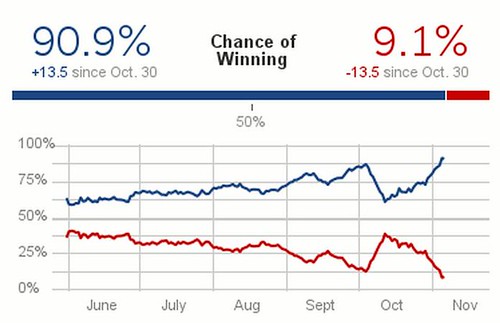
Before Trump ran for President, he pulled a Loretta Lynch and asked Bill Clinton's permission to run against Hillary. His own staffers admit Trump never intended to be President, he just wanted free publicity. During the campaign itself, Trump reneged on his promise to support the eventual GOP nominee. Last month, June 2016, Trump hinted that he had no intention of being President. As for electoral support, Trump has no coat-tails  and provides no support for down-ticket candidates - the only candidate he has endorsed has been a pro-abort who lost by 30 points.

And then there are the polls. Notice how George W. Bush beat Kerry? George was frequently in the lead, in the run-up to July, and dominated the election from September onward.

McCain was ahead of Obama at least a few times prior to July, but was not able to beat Obama at all in the polls between April and July. He got a short-lived bounce only because of his Palin pick for VP, but predictably ended up losing.


Romney didn't even do as well as McCain. Apart from a couple of very short-lived blips immediately prior to the election, Romney NEVER beat Obama in the year of polling leading up to the conventions. Not once.

Like Romney, Trump has NEVER beaten Clinton in the polling. Not once. Not ever. Trump is doing worse against Clinton than McCain did against Obama. Trump is arguably doing at least as badly or worse against Clinton than Romney did against Obama.

From the beginning, all the evidence tells us Trump intended to at least use the presidential run as a personal publicity campaign and at best divide the field by destroying the Republican's best candidate(s) while handing the election to his friends, the Clintons. Trump crowned his achievements by deliberately destroying Ted Cruz' convention speech, permanently undermining the natural Republican leader and thereby assuring downstream chaos among Republicans for years to come. In fact, Trump arguably and deliberately sabotaged the entire Republican convention.

Those who believe any of Donald Trump's lies, or who still believe Donald can win, have been Trumpwinked. A person is Trumpwinked when they believe a con man/politician, e.g., Donald Trump.

The facts are quite clear.
A vote for Trump has always been a vote for Hillary.
The destruction is complete.
Hillary Clinton is our next president.

UPDATE:
I finally found Nate Silver's forecasts for the Romney-Obama matchup:


Here's the current graph for Trump-Clinton


Tuesday, July 12, 2016

Modesty and Scandal, Part 2

There is a lot of evidence that women engage in "slut-shaming" much more than men. It isn't that women are concerned about modesty, rather, women don't like the competition. Women form groups to ostracize and bully "outsider" women, and "modesty shaming" is one way to accomplish that goal.

If traditionalist women were really interested in following ancient norms, then traditionalist women would encourage men to wrap their hands in clothes to avoid touching female skin. In fact, this was arguably one of the reasons both sexes wore gloves whenever they appeared in public during most of the Victorian era.

Despite the fact that gloves were, for centuries, considered an essential part of a public wardrobe, I have never heard a "modesty" warrior argue that glove-less women are dressed immodestly. Which makes me think this isn't about "modesty", it is actually about females using "virtue-signalling" to crush the female opponents in the competition for snagging and holding onto a mate. That is, the women are not actually interested in modesty, rather, they are interested in signalling how good they are, and how trashy their opponents are.

Do I need to point out that this is not  a Christian motivation?
Yes, I probably do.
Which is why this follow-up to my earlier post on the correct Christian attitude is necesssary.

On Modesty and Scandal


Saturday, July 09, 2016

Truth in Religion


Fr. Michael Muller is quite, quite, quite wrong.

People only believe in other religions because every religion, to be believed, must contain some seed of truth. Insofar as any religion contains any truth, that truth is Christ.

So, to say "I respect every religion" is another way to say, "I see the kernel of truth that is Christ which shines forth in that religion."

True, every non-Catholic Faith has much which is not Christ, much of every religion is falsehood. Where there is falsehood, we see Truth twisted, Christ whipped, crucified and crowned with thorns within, and yet that seed of Christ's blood is what attracts them. And that much we not only CAN respect, but we MUST respect, for Christ is there, calling out through the blood and suffering which wraps every other religion like a shroud, His life lies within or no man would follow.

“If only it were all so simple! If only there were evil people somewhere insidiously committing evil deeds, and it were necessary only to separate them from the rest of us and destroy them. But the line dividing good and evil cuts through the heart of every human being. And who is willing to destroy a piece of his own heart?” - Aleksandr Solzhenitsyn

Why The 2nd Amendment is Dead


This is where advocating for a citizen's right to own guns falls apart.

We have the right to bear arms - that is clear, it is in the Constitution, not just the 2nd Amendment, but also in Article 1, Section 8.

BUT, if we really have the right to bear weapons, if that right is truly given to us so, then we must have the right to overthrow the government. As the Declaration of Independence insists "That whenever any Form of Government becomes destructive of these ends, it is the Right of the People to alter or to abolish it," That means we will be shooting people and blowing up things.

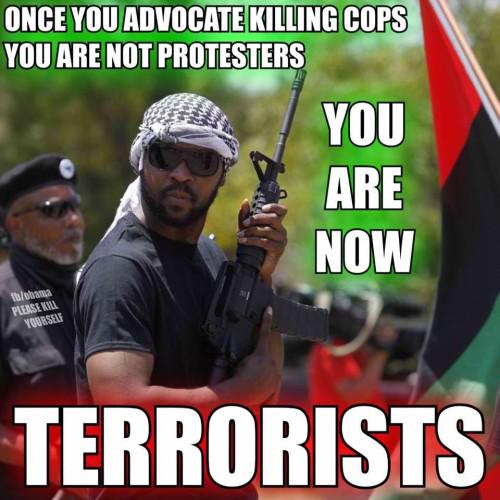
But if the citizens have the right to overthrow the government, then the citizens at some point have the right to shoot cops and other government employees.

And therein lies the rub.

I am neither willing to personally shoot cops and other government employees, nor to have other people do it in my name. I've never met a gun's rights advocate who actually wanted to do it either. The NRA members always emphasize how law-abiding they are. That's good. But you can't say "I am law-abiding and I support our troops" while simultaneously saying "I own a gun in case I need to overthrow the government."

So, the 2nd Amendment is functionally a dead letter.

As long as guns' rights advocates hold the sentiment expressed in the meme above, buying a gun is like buying a Lotto ticket - it gives you the chance to dream that you are your own man, while you pretend to ignore the reality that you are really just still a cubicle worker for the Man.

What's Wrong With Panhandling?

So, I'm still not clear on where the problem lies.
What, exactly, is wrong with panhandling?  It's a sales job with constant exposure to the weather, pure commissions, no benefits. It's a tough job. Why do people look down on it?

 People get upset because a panhandler gets into his truck at the end of the day and drives home to a quarter million dollar house. So what? So, I am supposed to be upset about successful panhandlers? It's street theater. Actors get paid millions for pretending to be murderers, psychopaths, etc. They sell us on the idea that they actually ARE these things and we pay them handsomely.

Why can't street actors turn a few bucks? Some of these guys are better than Keanu Reeves... alright, ALL of them are better than Keanu Reeves. So, if I can live with Reeves having a million dollar house, why should I be upset if a panhandler has a quarter-million dollar house?

Like any good movie, pan-handlers sell emotions. They sell us feelings, about themselves and us. We get to feel superior to someone today. We get to have pity on someone today. We get to give them a five-dollar bill or a pizza and feel like we are good people. No matter what our boss says, our spouse says, that girl that dumped us says, we get a chance to feel better about ourselves. That's what they are selling, and they stand out in all kinds of weather to give us that chance.

 Panhandling takes hard work, skill, perseverance. They get rejected more in an hour than an office worker does in a week. So, again I ask: what's wrong with panhandling?

Wednesday, July 06, 2016

How Comey Saved the Oligarchy

Everyone is on about how Comey saved Hillary from prosecution, but everyone is missing the larger picture: by acting in this purely political fashion, Comey saved the entire entrenched oligarchy from prosecution.

Remember how the Trump University trial was originally scheduled to begin July 7, the same day the Republican convention was to start? Well, that changed in May. Trump used the existing rigged judicial system to get the trial date moved to November 28. Trump can't have an embarrassing trial take place at an economically or politically embarrassing time, now can he?  Trump is too big, too important, to be troubled by picayune little fraud trials. Better for all concerned if no little people stood in the way of his ambitions. So, in May, even as the trial judge is moving the trial date, Trump deflected attention to the way the system is rigged in his favor by ... wait for it... complaining that the system is rigged against him.

Now that Comey has declared Clinton off-limits to the law, now that the rigging of the system is on display for all to see, Trump has the complete deniability he has always claimed. By declaring Clinton off limits, Comey has declared every last one of the oligarchs safe.

You see, no matter who tries to bring Trump to trial, Trump can now say "It's all political! It's a rigged system! That's why they are after me! I'm pure as the New York slush!" By clearly showing the world exactly how rigged the system is, Comey has effectively denied the validity of every trial motion that could ever be brought against any of the oligarchs. Oligarchs can never again be convicted of anything.

Every powerful person can use the Trump-Clinton-Comey defense ("The system is rigged against me!") no matter what the situation may be. The oligarch's sycophants will then take up the chant and shout down whoever points out that the evidence of guilt is actually quite clear. Every trial can now be reduced to a political witch-hunt, every shred of evidence is just an irrelevant fact blown out of proportion by people out to get the oligarch, no reasonable prosecutor would ever use such tainted material, and if any prosecutor ever did, that person is, by definition, on a McCarthyite witch hunt.

By illuminating how rigged the system is, Comey has declared every oligarch with sycophants and a power base (which is all of them) off-limits.

What we saw done successfully as a one-off tactic with Ken Starr and Bill Clinton has now been turned into federal policy. We are officially a banana republic. Trump and Clinton couldn't be happier with how this has turned out. It's a win-win for the nation! We should be thanking Comey: he has finally made America safe for oligarchs.

Saturday, July 02, 2016

Thursday, June 30, 2016

The Original Rad-Trads

"It is outrageous! The Vatican Council was so imprecise that anyone could use the conciliar documents to promote heresy if they wanted! And Pope Francis is even worse! I don't even want to read what he says anymore, because it doesn't make any sense!"

This is the mating call of the rad-trad. They use it to find dates, rally their families, and collect beer-drinking buddies on the back porch. It is an old call that goes all the way back to 325 AD.

Yes, if we use rad-trad principles, we can see that the first failed council was the Council of Nicaea, the first failed Pope was St. Sylvester I. Why? Well, we need look no farther than that dastardly word "homo- ousion".

In 300 AD, the "normalcy bias" for that word was that it stank of heresy, which it did. While the word had at first been used in a licit sense, Paul of Samosata had used it to argue that the Father and the Son are one Person, not two distinct Persons. He was condemned for the idea, and the word fell into ill odor as a direct result. In fact, the word was a touchstone for the Arian heresy, the heresy which built upon Paul of Samasota's error, and the very heresy which the Council was called to discuss. Yet, despite its bad reputation, this arguably imprecise, heretic-associated word was used in the Nicene Creed. Worse, to add injury to insult, not only was the word considered imprecise because of its heretical past, its use also constituted the first time a creed had ever used a non-Scriptural word. It was a complete mess.

But the council didn't stop there. It also dared to make changes to the ancient liturgy, laying its conciliar hands even upon the dating of the mother of all feasts, the date of the Easter celebration! What new craziness was this?  The Council of Nicaea ruled that all churches should follow a single rule for Easter, which should be computed independently of the Jewish calendar, as at Alexandria. However, in its typically imprecise way, the council did not make any explicit ruling about the details of the computation. It was several decades before the Alexandrine computations stabilized into their final form, and several centuries beyond that before they became normative throughout Christendom.

"Why did the Council even go there? Why did the Pope sign off on such foolishness? Why couldn't they have been precise, so there would be no confusion?"

The rad-trads of the 300s were the Coptic Christians. Their dislike of the documents and distrust of the Pope became so great that the Copts would schism off within less than a century, Although they eventually accepted the liturgical changes, they couldn't stand the - from their point of view - virtual heresy of the Christians who used this nonsense word in the liturgy and the creed.

So, like today's traditionalists, the Coptic Christians refused to trust the council and the Popes. As a direct result of their obstinate refusal to submit to ecclesial authority and use a little Christian charity in their dealings with Rome, they suffered some rather disturbing consequences. Within 300 years of their rejection of the council, they were overrun by Muslims and are, today, barely hanging onto Christian Faith in Egypt. More than one historian has argued that the Muslim takeover of North Africa was due in no small part to the immobilization of the Copts that resulted from their inability to deal with theological heresies following their split with Rome. Though they are closer to unity with Rome than any of our separated brethren, to this day they are still separated from the Church.

We have the world we live in today because the rad-trads of the 300s simply couldn't find a way to accept a new way of phrasing ancient truths. They refused to have faith in a Pope and a council who used language they weren't comfortable with.

It is normal for every council to have its "rad-trad" community. Let us hope that the 21st century group fares better than the Copts have.

Monday, June 27, 2016

Pope Francis is Crazy

This is crazy. Why is the Pope teaching standard Catholic doctrine instead of teaching my personal, biased, twisted version of Catholicism?

The Pope's antics are exactly why the Church is in crisis right now. He needs to resign and let me, or at least people who think the same way I do, take over.

Our Lady of Fatima said this would happen, which is why God created me. I am here to save the Catholic Church. If the Pope isn't willing to listen to me, he's a Freemason and the Anti-Christ.  Sure, Martin Luther taught that the Pope was the anti-Christ, and Luther was a heretic, but even a stopped clock is right twice a day.

Either Catholics can start listening to me, or they will all go straight to hell. And don't think it won't happen - I have dozens of Magisterial documents that say what I am saying. If you just read the chain of out-of-context quotes I provide below, you will see that what I say is true.

It amazes me that the Pope seems completely unaware of Church documents. Instead, every time the Pope speaks, he contradicts what I think, and I'm getting pretty tired of it. This Pope is a complete disaster. To be fair, earlier popes were sometimes a little off, but they weren't able to access my thinking because there really wasn't any social media presence through which they could have learned what I think, so they aren't at fault. But this Pope... this Pope has no excuse. I've posted on Facebook, I've tweeted on Twitter, I've even put up Instagram photos and used hashtags. I've done it all. He really should know my thinking by this point. He has had endless opportunities to conform himself to the way my friends and I think, but he still refuses to comply.

It is so tiresome. He simply does not listen. Instead he goes off on these crazy rants on planes, in front of reporters, no less, pretending that he has greater authority than me and my absurd personal interpretations of various papal bulls, exhortations and conciliar documents. And let me be clear on this - as a lay person who has spent almost a dozen hours studying the entire Magisterium, I am absolutely a subject matter expert compared to this Pope, or, for that matter, compared to any bishop who has only a few lousy years of seminary and theology grad school. Apart from Masonic, demonic or similar influence, there is simply no explanation for why they don't pay more attention to what I have to say.

Make no mistake - this is all the fault of Freemasonry. And believe me, I know. I've read dozens of Freemason-inspired works that describe how the Freemasons have already taken over the Church. Why would the Freemasons lie about a thing like that? Now that the Freemasons have admitted it, I know the great truth: I can't trust the Pope. Why? Well, because the Freemasons have told me that the Pope himself is a Freemason. Again, I know it is true, because the Freemasons have no reason to lie about that. They infiltrated Vatican II, which is why the liturgy is no longer to my liking and is thereby proved to be false liturgy. They infiltrated the papacy, which is how they foisted their false liturgy onto me.

That is obviously why the Pope's teachings, why Vatican II's teachings, do not conform to my own understanding of the Catholic Faith. The Holy Spirit guides me into right understanding. The Holy Spirit does not guide the Pope, because I now know the Pope is a Freemason. It didn't guide the Council, because the Freemasons have made clear that they controlled the council.

Also, this is the end-times, and no one can trust the Pope during the end-times. How do I know? Well, because my personal interpretation of the private revelation of Our Lady of the Latest Apparition makes that perfectly clear. My rosary turned gold for a few minutes when I meditated on the Freemasonic takeover of the papacy and Vatican II.  All the signs are there.

That is why I have had it up to here with Pope Francis. It's time for the Pope to stop trying to foist his secret Masonic, New World Order, communistic socialism on good Catholics, by which I mean, me and those who think like me. It is time for him to read Church documents exactly the way I do. It is time for the Church to recognize that the Holy Spirit is in charge, as channeled through me.

Sigh.
It's not easy bringing the Church into conformance to God, but that's what I'm here for.
If they want to be saved, it will only be by following what I say. The Church has had bad popes before, She will survive, if only in the remnant that consists of me and my right-thinking friends. The rest of you will burn in hell. I will pray for you.

The Robot Apocalypse

Should we be as terrified of artificial intelligence as Elon Musk and Bill Gates?

The number of books, movies and other cultural references that use the killer robot as the central meme is almost countless. From the Jewish legend of the golem, through Frankenstein, to the current fascination with murderous AI, we have long understand that our being made in the image and likeness of God means we may, indeed, have the ability to form life from the earth.

We know such life would not be human, would not have the divine breath breathed into it, but would be less than that. Would such a creation, formed by the supernatural hand of man instead of the divine hand of God, would that creation know how to love, or would it know only how to destroy?

If a man-made being were possible, in order for the being to be like us, it would have to understand love. Is this possible?

We could argue that since love is a relationship between persons, and robots aren't persons, it would not be possible for such creatures to understand the relationship that is love.

On the other hand, we can argue that God is perfectly logical and that God is Love, so love must be the result of perfect logic. If that is true, then logic-based intelligences would be able to understand love. Of course, to do so, we would have had to program them correctly. Insofar as we inadvertently wrote errors into the program logic, the creatures we created would not be able to love.

There is a further wrinkle to the difficulty. Emotion is the result of endocrine levels that wash through our system, influencing brain function in ways we do not understand. God does not have a body, so God does not have emotions, but our emotions must, somehow, reflect the pure rationality that is God, so they must somehow be accounted for in our programming. To date, we have no knowledge of how to make that part work. We do not understand the logic of emotion, or of emotional love. Because we don't understand it, we can't code for it. As a result, any golem we create will necessarily be incomplete, it can be nothing more than the sum or our own incomplete self-understanding.

And that is the heart of the problem. An artificial intelligence is, ultimately, nothing more than a programmer, or a team of programmers, producing their own partial reflection, using silicon and steel instead of a silvered glass mirror. Since every AI is the result of a program written by a human being, robots are - at best - merely a reflection of us. Robots, computers, programs, all of it, is just us looking at ourselves through the glass darkly, using Boolean logic as our incomplete lenses as we peer into our own fallen souls.

Deep down, we know that.
And that, perhaps, is why robots frighten us so much.

Friday, June 24, 2016

The Role of Faith

Can research really say something (anything) about the inner life of faith and doubt, trust and uncertainty that is religious belief?

It is important to remember that doubt and uncertainty are not, strictly speaking, part of the life of faith. Faith is trust. Doubt and uncertainty are lack of trust.

Thus, we may speak of the waxing and waning of faith, but we cannot speak of doubt and uncertainty as being part of the faith life any more than we can speak of cholera and dysentery as being part of the healthy lifestyle.

You might say, "But doubt and uncertainty are a necessary part of faith! To deny that all faith includes doubt would be both untrue and, to me, a sign of hubris!" This isn't true, as is easily demonstrated. Simply take that phrase and substitute the appropriate terms: "To deny that all health involves dysentery is both untrue and a sign of hubris!" Does that make sense?

Too many people view the word "faith" as they do the word "cleave" - they treat "faith" as if it were its own antonym. It isn't. Doubt is not a necessary part of faith. To say that doubt happens to otherwise faithful people is identical to saying that dysentery happens to otherwise healthy people - a true statement, but a non sequitor.

Theology is a science. Faith, at least in Christian experience (and arguably in Judaic experience) is an evidence-based attitude. You could make arguments against this position in other traditions, of course. Hinduism is not faith-based, and Buddhism isn't even, properly speaking, a theology. But the whole purpose of the OT in Jewish tradition is to record evidence that God is trustworthy, the whole purpose of the NT is to record the evidence of what the trusted God has done.

If we were to look at experimental science, we would see the role of doubt as appropriate only to one's own interpretation of available data. I don't doubt the facts. I doubt - at most - that I personally have correctly collected, interpreted or presented the facts. The role of doubt for a theologian is the same - I don't doubt reality, I doubt my own ability to grasp it correctly. So, I can only struggle with faith in myself, I cannot, properly speaking, struggle with faith in God..

In short, I trust God, I don't trust me.
THAT is the only proper way to discuss doubt in regards to faith.

Tuesday, June 21, 2016

Why Orlando Was A Tragedy

[Calling the Orlando shooting a tragedy] is a misuse of the term, one that enables our evasions of political reality. It is exactly the opposite of “tragedy” in its classical sense. In his Poetics, Aristotle says that an action is “tragic” when it unfolds in a way that causes the protagonist to suffer, not by happenstance, but in accord with an intrinsic logic. The suffering of the tragic protagonist is fitting. The upshot is catharsis, a release of strong feeling that restores emotional equilibrium. An event is classically “tragic,” then, when suffering is meaningful. We resonate to suffering cathartically when we sense its meaning—and sense that we are implicated in it. 
But when we apply “tragedy” to mass murder, our sense of the word is exactly the opposite of Aristotle’s.
Thus asserts R. Reno, of First Things. Sadly, Reno is exactly wrong. Not in his reference to Aristotle. Tragedy does, indeed, refer to the protagonist's suffering in accordance with intrinsic logic. Rather, he is wrong to refuse the Orlando shooting the title of "tragedy."

Now, the ancient Greeks would agree with Reno. Since Aristotle's confreres had no particular issue with homosexuality, they would see a homosexual wreaking violence upon other homosexuals as senseless, illogical - certainly not a tragedy. Rather, this would be a crime or an act of war.  But Christians cannot agree with the pagan Greeks on this.

Christians recognize that homosexual activity is a sin against God. Now, if we were blinkered, malformed Christians who looked only at the gravity of the sin against God, we would be tempted to agree with the independent Baptist preachers who insist that the suffering and death of the homosexuals in the Pulse was completely just and logical. We would, if we were so spiritually immature, see this as real Aristotelian tragedy: both shooter and victims reaped in their bodies the spiritual violence they had attempted, through their sins, to inflict on God. Cold justice has been served. The pagan necessities are satiated.

But, of course, Christians are not permitted to look only at the gravity of any man's sins against God. Christians are required to look also at how the debt incurred by sin, the debt of suffering and death, is paid. The heart of the Christian message lies not in man's debt, but man's redemption: Christ, an innocent man, paid for our sins; an innocent man suffered and died for sins He had no part in.

For the pagan, for the spiritually immature, this makes no sense. The Greeks did not believe in the all-encompassing love of God. To a society that did not recognize love, the story has no logical coherence. It is a meaningless, pointless death. Thus, as Paul notes, the pagan Greeks saw the Gospel - the innocent Christ Who suffered and died for everyone else's sins - as a folly, not a tragedy.

This is where Christians differ from the pagan Greeks. For the Christian, the Gospel is most certainly a tragedy, because we view it not through the cold logic of the pagan Greek retributive universe, but through the eyes of divine Love. The Cross follows the logic of Love, not the logic of retribution. Thus did the Cross transform the Greek understanding of tragedy into the Christian understanding.

If the Gospel teaches us anything, it teaches us the divine, as opposed to the human, meaning of tragedy. It tells us the complete story: what sin really is, why we deserve to suffer, how Christ took what we deserve onto Himself, leaving us with only the bare dregs of suffering to endure. Once we have Christian eyes, we see that the injustice of history, the illogic of human suffering, lies not in the fact that we suffer and die, but rather in the failure of the world - even the natural world - to recognize the debt Christ's suffering has already paid.

Christ's suffering follows the logic of love. A mother gladly suffers for her child, the beloved suffers for the loved one. The lover takes the punishment so that the beloved does not suffer at all. So, according to the pagans, once Christ paid our debt, we should, according to human eyes, suffer no more. If we follow human understanding, Joel Osteen is right - we should have only a Gospel of Prosperity. According to human understanding, if Christ' suffering really does pay for all, then any suffering we experience is truly meaningless, meaningless in a way that was literally impossible before the Cross. We suffer for a debt that has been paid? How absurd!

Before the Cross, suffering was not absurd. We could honestly see that we deserved our suffering and death. Thus, if the Pulse had happened before the Cross had happened, the Pulse would be a true tragedy: we gain our comeuppance.

But, after the Cross, after the payment is made, our suffering makes no sense, unless... unless...

The only way our suffering has any intrinsic logic, any tragic element, is if our suffering shares in His suffering. Our suffering only has meaning if we suffer for love of Him.  He was innocent, yet He took on our suffering because of His abiding love for us. His suffering made us innocent.

Because He has made us innocent, we can now suffer as only the innocent suffer, as only the Truly Innocent One suffered, and we can now do it as He did it - we can accept our suffering only out of our pure love for the Beloved. Because Christ wiped out our sins, our suffering now can truly conform us to Christ, transform us into Christ. Only when our suffering is united with the suffering of the Cross, only then does our suffering attain truly tragic status again.

Our suffering is not tragic because of the pagan logic of a cold justice, but rather it becomes tragic through the fiery logic of our burning love for God, and more important, His fiery love for us. Our love is a love He taught us, our endurance is now an endurance He taught us, Our love, our willingness to endure suffering, truly becomes a pale, flickering imitation of the God Who is Fire.

We deserved to suffer because we have each fallen short of the glory of God. Christ removed our guilt, and with it, our suffering. And, now that He has made us innocent, we once more gladly shoulder for Him the suffering He gladly shouldered for us, so that we may imitate Him Who loved us.

Once the Cross is in place, our suffering only becomes unjust, it only becomes non-tragic, it only becomes illogical, if it is separated apart from the Cross. Our suffering and death only lacks logic insofar as it fails to recognize or acknowledge that Christ has already paid our debt. It only lacks meaning if it is not endured for love of God.

After the Cross, suffering only fails to share in tragedy insofar as suffering fails to share in the Cross. And it is only in THIS sense that we can refuse to call the Pulse shooting a tragedy. If we refuse to call the shooting a tragedy, we must necessarily assume the people who suffered and died there did not do so in Christ, that they suffered apart from the Cross, that they had no union with Christ whatsoever. To refuse the title "tragedy" to this scene of carnage and death, we must hold these suffering and these dead to be a people unreedemable, condemned to hell.

And thus do we see both First Things' and R. Reno are actually preaching a message indistinguishable from the independent Baptist preachers who chortle over the shootings and revel in the thought that victims and shooter alike burn in hell. Unless we know with mathematical certainty that they are all truly consigned to hell - which no man can know - such revelry is the complete antithesis of the Christian life and worldview. We cannot, in Christian charity, even think such a thing. Christ died for all, for them as well as for us. He may have drawn some or all of them to Himself in ways unknown to the small, shrunken, wizened person, the tremendously finite individual who is me. I have not the mind of Christ. All I know is that it is entirely possible for prostitutes and tax collectors to enter the Kingdom of Heaven before me.

What happened in Orlando was not an attack on our society, for the activities at the Pulse is not what anyone wants society to be. We do not want our society to sin against God. A homosexual gunning down dozens of homosexuals is a sin against God. A Muslim slaughtering victims while he called upon ISIS and Allah so that he might be redeemed by the human slaughter may thinks he commits a redemptive act, but what he commits is evil.

At the Pulse, we saw a non-Christian offering human sacrifice, as all non-Christians eventually do, for all men desperately wish to imitate the Man who sacrificed Himself for men. Even those who openly reject the Cross secretly desire it, even the man who inflicted the slaughter might, despite his most grievous sin and only through the love of Christ, might yet have been saved. And, if he be saved from hell, it is not because of the tremendous evil he committed, but despite of it, not because of the evil he inflicted, but because of the faint, dim image of the Good he, in his twisted understanding, blindly, desperately wanted to do.

Do not hesitate to call Orlando a tragedy, for it was.
It was a tragedy for every soul involved, victims, perpetrator and spectators.
May God have mercy on all our souls.
Amen.

Saturday, June 18, 2016

The Sinner Who Would Not Be Broken

"He spoke of his encounter with a woman in Buenos Aires who “reproached” him. She said that priests study for the priesthood for years and can get permission to leave the priesthood to marry and have a family. For the laity, this woman said, “we have to do the sacrament for our entire lives, and indissolubly, to us laity they give four (marriage preparation) conferences, and this is for our entire life.”"
Everyone commenting on the Pope's recent remarks on marriage are up-in-arms. Why? That part is not clear. I haven't talked to a priest in the last 20 years who says anything different. Priests who work on marriage tribunals have been saying what the Pope just said for a long, long time. Marriage preparation is terrible, most people getting married (or getting any other sacrament, for that matter, from baptism to confirmation to the Eucharist itself) don't really understand the sacrament they are receiving.

But what I want to focus on here is something quite different. By including the priesthood in with the comparison to marriage, the Pope wasn't making new remarks on marriage - anyone paying attention to the situation agrees with the Pope's remarks - he was making interesting remarks about the priesthood.

Think of all the priests who are badly formed. Priests who abuse the liturgy, priests who refuse to celebrate the traditional Latin Mass or refuse to celebrate the Novus Ordo Mass. Priests who attack the pope from the ambo or praise homosexuality or refuse to teach the evils of contraception and abortion, refuse to acknowledge the laity's right to defend themselves with a gunpowder weapon (a right which is simply a corollary of just war doctrine), etc., etc., etc. ad nauseum.

As the papal remark points out, priests receive years of training, but they are generally just as crazy as the laity. The papal remarks are so stunning precisely because they strike at the heart of a popular American conceit, the conceit that education solves everything.

If we just teach people well enough, send them through enough training classes, perhaps even give them a lovely degree, they will be educated out of original sin. It is the American belief that the associate's degree is more salvific than God's grace, that the university professor, teacher, instructor priest, in short, some man or woman standing in front of a classroom, can do a better job than Jesus.

If anything proves the falsity of that idea, it is the priesthood. We train them for years, but they still don't necessarily understand the sacrament they receive any better than the burbling infant whose head is doused with water or the couple that exchanges vows in front of the altar.

God's grace is a great mystery, a mystery none of us understand very well. We receive this wrapped gift, we spend our lives trying to unwrap it and use it, and in the end, despite all of our training and our discussions and books and seminars and conferences, the vast, vast majority of us still simply, utterly, completely fail.

We are broken and we don't like to hear that we are broken. The remaking of a single fallen man is a work greater than the original creation of the world. We know that, but we don't really think the fact applies to us.

That's why so many people, especially traditionalists, are upset with this Pope.
We don't want to face the reality.
We don't want to face how broken each of us really is.


Tuesday, June 14, 2016

We Don't Want To Hear It

After 9/11, everyone was up in arms about the vicious attack on America that killed 3,000 people. At the time, America's abortion clinics killed 3,000 children every 48 hours. Democrats, then and now, routinely ignore the violence of abortion. The MSM refused to point out that abortionists were as violent every day as Muslim terrorists. No one wanted to hear that second fact. It didn't fit the popular meme.

When a white cop shot a black perpetrator in Ferguson, the cities rioted. Despite the outrage, we know that, in this country, most blacks are actually killed by other blacks. In fact, 6% of the population (black men between the ages of 16 and 30) commit 50% of the murders in the United States. The victims of these violent young black men are almost always other young black men between the ages of 16 and 30. Democrats routinely ignore the violence within the black community. No one wants to hear that second fact. It doesn't fit the popular meme.

95% of black voters are Democrats, which means half of America's murders are committed by Democrats. No one wants to hear that. It doesn't fit the popular meme.

Islam is, according to Democrats, a religion of peace. 95% of the world's conflicts involve Muslim combatants on one or both sides. In 2015 alone, 450 of the year's 452 suicide terrorist attacks were carried out by Muslims. Democrats routinely ignore the violence within the Muslim community. No one wants to hear those facts. It doesn't fit the popular meme.

Homosexuals have higher rates of addiction in every category of addiction you can name, including interpersonal violence. The homosexual community is very violent: they beat each other up. A lot. In fact, much of Islam's violence can arguably be traced back to Islam's essentially homosexual orientation. As with the blacks and Muslims, Democrats routinely ignore the violence within the homosexual community. No one wants to hear this. The facts don't fit the popular memes.

Homosexuals make up 1-2% of the American population. Between 14% and 69% of America's serial/mass murderers have been homosexual. Everyone routinely ignores this. No one wants to hear this. The facts don't fit the popular memes

Omar Mateen was a registered Democrat, and a Muslim. He was also a regular at the homosexual bar, Pulse. Omar had an active profile on a homosexual dating app. In fact, reliable reports indicate he was homosexual. His ex-wife agrees that he was. The mass murder he committed, ending in suicide-by-cop, matches everything we know about how Democrats, Muslims and homosexuals act. Within hours of Mateen's death, a second non-Muslim homosexual shooter on the west coast targeted a gay pride parade for mass murder. Since he wasn't Muslim, this went almost entirely unreported.

Today, people are blaming Christians and guns for the mass murder committed by a homosexual Muslim. Many will focus on the fact that he was a Muslim. They will claim he was inspired by ISIS. No one will mention that he was just one more in a long line of homosexual mass murderers.

No one wants to hear this.
The facts don't fit the popular memes