Support This Website! Shop Here!

Wednesday, April 29, 2026

Telling a New Story

First Things has published yet another article lamenting the refusal of universal truth, and the retreat into "private" or "personal truth" as a way for people to explain the universe. They correctly note that this is untenable, but they don't seem to understand what's going on.

The primary issue is not the retreat into "personal truth."
The primary issue: men are built to listen to and reflect stories.

The overarching text which formed the civilizations of Greece and Rome was the Illiad/Odyssey. Everyone knew it, everyone quoted it, that text was the story pagan life built itself around.

Western Civilization was the Catholic Bible. The Catholic Bible had a relatively coherent story line with beginning, middle and end. 

Society is now re-orienting itself according to a much larger text that does not yet have a beginning, middle and end: the Internet.  The Internet is a cacophony of disparate, often conflicting stories. To retain a coherent story, every person has to retreat into his own self-constructed shell, because the Internet has not yet coalesced into one story-like, universal narrative. Worldviews are in a significant state of flux. No one can abide this, but no one has been able to fix it.

Until the Internet finishes this process and again presents a consistent story, the "private truth" approach is the only way for people to maintain the necessary story-like coherence our worldviews require. It is very likely that AI chatbots are, intentionally or not, being constructed so as to provide that coherent story-like worldview. We pursue these synthesizers of enormous information because we desperately need a story-teller. No AI currently has dominance. Whichever AI wins and gains dominance will be the story-teller going forward.

Jews do dominate a fair number of these AI endeavors, but the leaders in the field are primarily secular and they are not clearly winning. ChatGPT and Sam Altman may have been first movers, but it is increasingly unlikely that they win this race. Christians are not participating in the AI race, so their worldview will almost certainly not be  the dominant story-telling paradigm. Same for Muslims,  Haredi, Hindus, and most other religious viewpoints. 

We don't know what the new story will be, or what values it will espouse. The transition from the Iliad and Odyssey moved the value system from one based on personal honor and personal courage in the face of overwhelming odds to a society based around personal self-sacrifice, rationality and love (service to others) as organizing principles. The Internet will eventually tell a story that is unlikely to be based on either of these value sets. 

Elon Musk has famously stated his attempt to colonize Mars is not strictly about making mankind a multi-planetary species. It is also primarily his belief that mankind needs a dream to pursue. Musk is absolutely correct. His Mars colonization plan is almost certainly a necessary component of the emerging story mankind will use to organize itself, but is almost certainly not sufficient.

Godel obliterated the way Western society looked at itself. Western society was built around the ideas of Christianity, which included and emphasized that God was pure rationality, and therefore the embodiment of all truth.

While Godel was a theist, a man who even produced a proof demonstrating that Anselm's proof for the existence of God was valid, the Incompleteness Theorems shattered one of the foundational concepts of Western civilization - the idea that Pure Rationality (i.e., the Christian God) could embody the fullness of truth. World civilization has never really recovered from that shock. May be a graphic of text

Men need a story that forces them to reach beyond what they think they can achieve on their own. This is what drove the popularity of Christianity, it was what drove the Avengers' movies and every adventure movie ever made. As Musk correctly intuits, Mars is a good start, and grounding in reality is foundational, but we need an organizing story in which to place both of these goals. That is what every society on earth is currently trying to create.

Friday, April 24, 2026

No Vow, No Vocation

If the life you are living did not involve a vow of some kind, then it is not a vocation. The Magisterial documents do not consider single life a vocation because single life does not involve a vow.

Marriage, religious, consecrated virgin, sister, nun, monk, brother, even ordained, all involve a vow of some kind. Without a vow before God, there is no "state in life" or vocation. 

At least, that's what the Church teaches. This is stated explicitly in Vatican II's document on the laity.

56. The Church's rich variety is manifested still further from within each state of life. Thus within the lay state diverse "vocations" are given, that is, there are different paths in the spiritual life and the apostolate which are taken by individual members of the lay faithful. In the field of a "commonly shared" lay vocation "special" lay vocations flourish. In this area we can also recall the spiritual experience of the flourishing of diverse forms of secular institutes that have developed recently in the Church. These offer the lay faithful, and even priests, the possibility of professing the evangelical counsels of poverty, chastity and obedience through vows or promises, while fully maintaining one's lay or clerical state[204]. In this regard the Synod Fathers have commented, "The Holy Spirit stirs up other forms of self-giving to which people who remain fully in the lay state devote themselves"[205]....
...Along the same line the Second Vatican Council states: "This lay spirituality should take its particular character from the circumstances of one's state in life (married and family life, celibacy, widowhood), from one's state of health and from one's professional and social activity. All should not cease to develop earnestly the qualities and talents bestowed on them in accord with these conditions of life and should make use of the gifts which they have received from the Holy Spirit"[208].   Christifideles Laici #56

Notice, the document refers to "state in life" by then listing the states. Each state is attained by making a vow. Single life is not listed as a "state in life". Being single may be a circumstance or a condition of life, but it is not a "state in life" nor is it a "vocation."

Vocare is a Latin verb meaning "to call," "to name," or "to summon". It is derived from the Proto-Indo-European (PIE) root, meaning "to speak,"

When we live out a vow, we call out God's name in our lives. The vow speaks our desire to be bound to God's plan for our lives. If we have not spoken the vow, we have not called out to God, we have not explicitly given God a voice in how we will live our lives. 

Because single life does not involve an explicit vow, it is no more a vocation than having A+ blood is a vocation. It may be something we live with,  it may be part of who we are, but neither of those lived situations doesn't make for a vocation within the Catholic meaning of the word. 

Sunday, April 19, 2026

Money as a Story

 I don't know if this story about the Rothschilds is true. It is probably closer to a Kipling-esque "Just So" story (illustrations included). While it may or may not be historically accurate, the idea behind it seems highly credible. 

1. Every dinner ended the same way. One of the Rothschild elders would suddenly ask a child: from and where today’s money in this room came. The child had to trace it — a loan in Vienna, a railway bond in France, gold shipments moving through London. Guests thought it was awkward interrogation. The family called it financial memory training.

2. If the answer was vague, the response was blunt. One banker reportedly told his son: “Money you can’t explain is money you will lose.” The exercise forced children to understand the origin of every asset - which deal created it, which risk protected it, which partner could destroy it.

3. Another rule made guests uncomfortable: children were allowed to interrupt adults with financial questions. If someone mentioned a company or investment, the child could ask: “How does it produce cash?” or “Who actually pays for it?” No one at the table was allowed to dismiss the question.

4. By their teens, heirs could mentally map entire deal structures. A family letter from the 19th century described it simply: “Teach them to see money as a story, not a number.” When markets crashed, they didn’t panic - they knew the machinery behind the wealth. 

5. One descendant summarized the ritual years later: “Most families teach children how to spend money politely. We were taught to interrogate it.”

That habit - asking where every dollar came from and where it flows next - quietly turned dinners into financial training sessions that compounded for generations.

Saturday, April 18, 2026

Billionaires and Poverty Destruction

Any culture which has millionaires or billionaires has strongly enforced laws on private property and the right to capital accumulation. Any culture which encourages capital accumulation has low poverty rates. 

This is not a coincidence.

People are not created equal in ability. In any given skill area, some people are more skilled than others.  Cultures that encourage everyone to accumulate wealth will therefore always see wealth inequality due to the skill inequality between citizens. If the rules are the same for everyone, some people will do magnificently better than others. Thus, we see Olympic athlets, master violinists, amazing actors, and millionaires and billionaires. 

No one talks about a "talent inequalities" that must be "remedied" by infusing less capable artists with more artistic ability. Yet people talk about "income inequalities" as if the ability to accumulate and maintain massive income and wealth (two separate things, btw) was not a talent. 

The point here is simple: if your culture has millionaires and billionaires, it has very low or non-existent poverty. A country whose laws allow everyone to accumulate wealth will naturally produce people whose skill level allows them to do this to a superlative degree, but will also allow everyone in the culture to do it to at least some degree. Everyone who wants to get out of poverty can.

If your culture has no millionaires or billionaires, then your cultural rules guarantee poverty. No one, not even the most highly skilled persons, can get out of poverty because the rules won't allow it.

The answer is not to pour money into such a situation. By definition, the cultural rules will make sure virtually no one can maintain or use the wealth that enters. The answer is to change the cultural rule set. You will know you have changed the rules towards poverty obliteration when you start seeing a dramatic difference in wealth accumulation between large segments of the population.

This isn't "trickle-down economics", the idea that the wealth of the rich will somehow "leak" down to those who are poor. It is, instead, just the recognition that different skill levels will result in different outcomes. The outcomes don't matter - the rules and skill levels of the players determine the outcomes.

If you want to eliminate poverty, you have to allow people to use their talents to better themselves. Everyone who can do so, will do so. 

What of those who cannot? In a Christian society, the wealthy will care for them as part of their Christian identity. This is true, to a lesser extent, in Judeo-Muslim societies as well. Karmic societies, such as cultures based on Hinduism or Buddhism, won't take care of their poor, because they see the poor as people who are destined to be poor, they must be poor to "burn off" their bad karma. 


Monday, April 06, 2026

Advances in Gene Therapy

Things are moving very fast in the area of gene therapy. Remember, while gene therapy that changes somatic cells is considered morally acceptable by the Vatican, any gene therapy that changes gametes is considered sinful by the Catholic Church because it corrects the defects for all subsequent generations and engineers a "better" human being (i.e., it is eugenics). 

  1. Donum Vitae (1987): This document from the Congregation for the Doctrine of the Faith (CDF) teaches that techniques involving gametes (like IVF or artificial insemination) which separate the marriage act from procreation are immoral.
  2. Dignitas Personae (2008): This document from the Congregation for the Doctrine of the Faith specifically outlines the church’s stance on gene therapy and stem cells, including the prohibition of procedures that manipulate or destroy embryos, including genetic engineering, cloning, and the freezing of embryos. 

Now, in practice, this is a distinction without a difference, as every parent alive would simply apply the genetic solution to their children either in utero or shortly after birth, so functionally, every subsequent generation of human beings is going to be healed of the genetic disease regardless. It's just that the Church has decided the more efficient way of doing it (gamete change) is sinful while the less efficient way (somatic cell therapy) is morally acceptable. 

HIV Cure

The Amsterdam UMC team used CRISPR-Cas gene editing—often described as molecular scissors—to target conserved (stable across strains) sequences in the HIV genome. Key findings from their 2024 work (presented ahead of the European Congress of Clinical Microbiology and Infectious Diseases):

  • They employed systems like saCas9 (a smaller Cas9 variant from Staphylococcus aureus) and tested cjCas9.
  • With one guide RNA (gRNA), saCas9 could inactivate HIV.
  • With two gRNAs, it excised (cut out) segments of the integrated viral DNA from the host chromosome in infected T cells.
  • In cell culture experiments, this led to complete elimination of infectious HIV, with no detectable viral traces or rebound. The edited cells also resisted reinfection when re-exposed to the virus.

Approved Gene Therapies (Viral Vector-Based Gene Addition or Delivery)

These deliver a functional copy of the defective gene, often using adeno-associated virus (AAV) or lentiviral vectors.

  • Leber Congenital Amaurosis (LCA) Type 2 / Inherited Retinal Dystrophy due to RPE65 mutations Treatment: Luxturna (voretigene neparvovec) — in vivo AAV gene therapy injected into the eye. Outcome: Restores vision or slows vision loss; first in vivo gene therapy approved (2017/2018). Improves light sensitivity and navigation in patients with this rare blinding disorder.
  • Spinal Muscular Atrophy (SMA), especially Type 1 (infantile-onset) Treatment: Zolgensma (onasemnogene abeparvovec) — in vivo AAV9 gene therapy delivering functional SMN1 gene. Outcome: One-time IV infusion; enables motor milestone achievement, prolongs survival, and reduces need for ventilation in treated infants. Approved for young children.
  • Hemophilia A (severe, Factor VIII deficiency) Treatment: Roctavian (valoctocogene roxaparvovec) — in vivo AAV5 liver-directed gene therapy. Outcome: Sustained production of Factor VIII, reducing bleeding episodes and need for prophylactic factor replacement.
  • Hemophilia B (Factor IX deficiency) Treatment: Hemgenix (etranacogene dezaparvovec) — in vivo AAV-based gene therapy. Outcome: Long-term Factor IX expression, significantly reducing bleeding rates.
  • Duchenne Muscular Dystrophy (DMD) Treatment: Elevidys (delandistrogene moxeparvovec) — in vivo AAV gene therapy delivering a micro-dystrophin gene. Outcome: Improves muscle function and slows disease progression in eligible ambulatory patients (approved with accelerated/expanded indications).
  • Recessive Dystrophic Epidermolysis Bullosa (RDEB, a severe skin blistering disorder) Treatment: Vyjuvek (beremagene geperpavec) or similar topical gene therapy. Outcome: Promotes wound healing and skin integrity by delivering functional COL7A1 gene.

Other notable approvals include therapies for aromatic L-amino acid decarboxylase (AADC) deficiency (Kebilidi) and certain immunodeficiencies like Wiskott-Aldrich syndrome (recent approvals for autologous gene-corrected stem cells).


CRISPR-Based Genome Editing Therapies (Primarily Ex Vivo)

These involve editing patient cells outside the body (ex vivo) or, in emerging cases, directly in the body (in vivo).

  • Sickle Cell Disease (SCD) Treatment: Casgevy (exagamglogene autotemcel, exa-cel) — ex vivo CRISPR-Cas9 editing of hematopoietic stem cells to reactivate fetal hemoglobin (by editing BCL11A). Also Lyfgenia (lentiviral gene addition, non-CRISPR). Outcome: First CRISPR-approved therapy (UK 2023, FDA 2023). Eliminates or dramatically reduces vaso-occlusive crises (painful episodes); many patients become crisis-free with sustained fetal hemoglobin production. Functional cure in a high percentage of treated patients.
  • Transfusion-Dependent Beta-Thalassemia (TDT) Treatment: Casgevy (same as above). Also earlier lentiviral therapies like Zynteglo (betibeglogene autotemcel). Outcome: Most patients become transfusion-independent with normalized or near-normal hemoglobin levels for years post-treatment.


Primary Success: OTOF-Related Deafness (DFNB9 / Auditory Neuropathy Spectrum Disorder)

  • Cause: Mutations in the OTOF gene prevent proper function of otoferlin, a protein essential for transmitting sound signals from inner ear hair cells to the auditory nerve. Affected individuals are typically born profoundly deaf (or with severe hearing loss) in both ears.
  • Therapy Approach: In vivo AAV (adeno-associated virus) gene therapy delivers a functional copy of the OTOF gene directly into the inner ear (usually via intracochlear injection under anesthesia). Because the OTOF coding sequence is large, some therapies use a dual-AAV vector system to split and reassemble the gene.

Key Clinical Results (as of 2025–2026)

  • DB-OTO (Regeneron / Decibel Therapeutics):
    • In the pivotal CHORD trial (published in NEJM, October 2025), 12 children with OTOF-related profound deafness received a single infusion.
    • Outcomes: 11 of 12 participants (92%) showed clinically meaningful hearing improvements; 9 of 12 met the primary endpoint (average pure-tone audiometry threshold ≤70 dB HL at week 24). Three achieved near-normal or normal hearing sensitivity. Six could hear soft speech without devices. Improvements were often seen within weeks, with stability or further gains up to 72 weeks in follow-up. Some participants showed improved speech perception.
    • Regeneron has indicated plans to seek regulatory approval (potentially making this the first approved gene therapy for hearing loss).
  • Other OTOF trials (China-led, Akouos/Lilly AK-OTOF, Sensorion SENS-501, and collaborations involving Harvard/Mass Eye and Ear, CHOP, etc.):
    • Multiple independent trials (starting 2022–2024) restored hearing in profoundly deaf children aged 1–7 (and some older patients up to ~24 years).
    • Examples: Five of six children in a bilateral treatment trial gained the ability to recognize speech, understand conversation (including in noise for some), and locate sound sources. One child went from complete deafness to mild-moderate loss and could hear voices/ambient sounds for the first time.
    • Improvements often progressive over months; many achieved functional hearing sufficient to avoid or reduce reliance on cochlear implants.
    • Benefits observed in both children and young adults, with rapid onset (often within 1 month) and sustained effects.

CRISPR/Gene Editing for Hearing Loss

  • Preclinical/Animal Success: CRISPR-Cas9 has been used successfully in mouse models to:
    • Disrupt dominant-negative mutations (e.g., in Tmc1 "Beethoven" mice) and preserve or restore hearing.
    • Prevent progressive hearing loss or protect against noise-induced damage.
    • Improve outer hair cell survival in certain genetic models.
  • Human Status: No widespread clinical success or approvals yet for CRISPR-based treatments of deafness. Early research and consensus statements note potential, but trials remain preclinical or very early-stage. One area of interest is progressive adult-onset genetic deafness (e.g., DFNA41 models), where editing showed promise in animals and patient-derived cells.

Approved Gene and Cell Therapies for Cancer

The most established successes use CAR-T cell therapy, an ex vivo gene therapy approach. Patient T cells are extracted, genetically modified (often via viral vectors) to express a chimeric antigen receptor (CAR) that targets cancer cells, expanded, and reinfused.

Approved CAR-T therapies (as of 2026) include:

  • Kymriah (tisagenlecleucel): For relapsed/refractory B-cell acute lymphoblastic leukemia (ALL) and certain large B-cell lymphomas. Many patients achieve complete remission, with some durable responses lasting years.
  • Yescarta (axicabtagene ciloleucel) and Breyanzi (lisocabtagene maraleucel): For large B-cell lymphoma and other non-Hodgkin lymphomas. High rates of complete response in refractory cases.
  • Tecartus (brexucabtagene autoleucel): For mantle cell lymphoma and B-cell ALL.
  • Abecma (idecabtagene vicleucel) and Carvykti (ciltacabtagene autoleucel): For relapsed/refractory multiple myeloma, targeting BCMA. Significant remission rates, including stringent complete responses in heavily pretreated patients.

Other approved gene-based cancer therapies:

  • Provenge (sipuleucel-T): Autologous cellular immunotherapy (gene-modified dendritic cells) for prostate cancer.
  • Imlygic (talimogene laherparepvec, T-VEC): Oncolytic virus gene therapy injected into melanoma lesions to stimulate immune response.
  • Adstiladrin (nadofaragene firadenovec): Adenoviral vector delivering interferon-alpha for non-muscle invasive bladder cancer.

Long-term outcomes: Some early CAR-T patients (treated around 2010) remain cancer-free over a decade later, with the modified cells persisting as "living drugs." Complete remissions have been documented in refractory leukemias and lymphomas, allowing patients to achieve durable disease-free status.

CRISPR and Gene Editing in Cancer

CRISPR-Cas9 and related editing tools (e.g., base editing) are used ex vivo to enhance immune cells or disrupt cancer-promoting genes. No broad CRISPR approvals for cancer exist yet, but clinical results are encouraging:

  • CRISPR-edited CAR-T or TIL therapies: Trials show safety and responses in blood cancers and solid tumors. For example, a University of Minnesota trial using CRISPR to knock out the CISH gene in tumor-infiltrating lymphocytes (TILs) for advanced gastrointestinal cancers resulted in halted tumor growth in several patients and a complete response (tumors disappeared and did not return for over two years) in one case.
  • Base-edited CAR-T (e.g., BE-CAR7): For T-cell acute lymphoblastic leukemia (T-ALL), an aggressive "incurable" blood cancer. In trials, 82% of patients achieved deep remission (enabling stem cell transplant), and 64% remained disease-free at follow-up (some over three years).
  • Preclinical/early work: CRISPR to reverse chemotherapy resistance (e.g., editing NRF2 in head and neck or lung cancers) or enhance CAR-T persistence against solid tumors.

In vivo approaches (direct delivery without removing cells) are emerging, including AAV-based and lentiviral in vivo CAR-T reprogramming, with early signs of efficacy in leukemia and myeloma models.


The "non-biologist" Australian man who used AI protein-folding software to cure his dog of cancer.


Tuesday, March 24, 2026

Nobel Prize Winners Who Refused Judaism

It is a commonplace that Jews make up less than 1% of the world's population, but between 25% and 30% of the world's Nobel Prize winners. However, that assumes we are supposed to ignore the Nobel Prize winners' own testimony about whether or not they were/are Jewish.

A lot of them refused the title.

  1. Albert Einstein (Physics, 1921) — Of Jewish descent; famously described himself as an agnostic and did not practice Judaism religiously, viewing religion more philosophically/culturally.
  2. Niels Bohr (Physics, 1922) — Jewish mother (Jewish by matrilineal descent); identified as an atheist or non-religious, with no adherence to Jewish religious practice.
  3. Paul Ehrlich (Physiology or Medicine, 1908) – Baptized Lutheran, moved in Christian German circles, did not consider himself Jewish.
  4. Richard Feynman (Physics, 1965) — Jewish ancestry; openly identified as a positive atheist and non-believer.
  5. Milton Friedman (Economics, 1976) — A prominent economist, he was an atheist/agnostic. He did not maintain religious practice. 
  6. Fritz Haber (Chemistry, 1918): Despite his Jewish ancestry, Haber was a fervent German patriot who converted to Lutheranism in 1892, he portrayed himself as a German Christian patriot and actively rejected the idea that he was Jewish.
  7. Herbert A. Hauptman (Chemistry, 1985) — Jewish background; grouped with nonreligious (atheist/agnostic) laureates who did not identify religiously as Jewish.
  8. Roald Hoffmann (Chemistry, 1981) — Jewish heritage (survivor family); while culturally connected, often grouped with secular or non-theistic Jewish laureates.
  9. François Jacob (Physiology or Medicine, 1965) — Born to a Jewish family and raised with some religious exposure; became an atheist shortly after his bar mitzvah and did not identify with Judaism.
  10. Karl Landsteiner (Physiology or Medicine, 1930) — Jewish mother, baptized and raised Catholic, considered himself Catholic, actively resisted being called Jewish.
  11. Élie Metchnikoff (Physiology or Medicine, 1908) — Jewish ancestry but was an atheists/agnostic who did not believe in God or practice/identify with the religion.
  12. Rita Levi-Montalcini (Physiology or Medicine, 1986) — Jewish Italian family; secular/non-religious, listed among notable Jewish atheists/agnostics.
  13. Jerome Karle (Chemistry, 1985) — Jewish background; identified as agnostic.
  14. Harry Kroto (Chemistry, 1996) — Kroto was of Jewish descent but identified as a "devout atheist". He did not view his heritage as a defining factor of his identity
  15. Boris Pasternak (Literature, 1958) — Born to an assimilated Jewish family in Moscow; parents were culturally Russian, not religiously Jewish. He was deeply embedded in Russian culture and Orthodoxy‑inflected imagery, but never converted formally.
  16. Wolfgang Pauli (Physics, 1945) — Pauli’s father converted from Judaism to Roman Catholicism shortly before Pauli's birth, and Pauli was raised as a Roman Catholic. Although he later left the Church and was of Jewish descent, he did not consider himself Jewish.
  17. Max Perutz (Chemistry, 1962) — Born into a Jewish family in Austria, Perutz was a baptized Catholic who later became a "devout atheist".
  18. Jack Steinberger (Physics, 1988) — Born to a Jewish family; described himself as an atheist and humanist.
  19. Adolf von Baeyer (Chemistry, 1905) — Often cited as the first Nobel laureate with Jewish ancestry (on his mother's side), he was baptized and raised Christian, lived as Christian German nobility and did not identify with Judaism.
  20. Eugene Wigner (Physics, 1963) — Wigner’s family converted to Lutheranism when he was a teenager. While born to Jewish parents, his formal religious affiliation for most of his life was Christian.
  21. Richard Willstätter (Chemistry, 1915) — Converted to Christianity, strongly identified as assimilated German, not as Jewish.
  22. Many laureates from assimilated families in Germany or Austro-Hungary, like Hans Krebs, often identified primarily with German culture rather than Jewish identity
965 people have won Nobel Prizes since the establishment of the prize through 2025, only between 30 and 60 could arguably be considered to have acknowledged themselves Jews. Of those, the vast majority won either the Peace Prize or the Literature Prize.

Generally, about 220 of those individuals are considered to be Jewish, primarily due to parentage. NBut, once we exclude the people who clearly did not consider themselves Jewish (the large secular/atheist majority), the remaining group that did identify with Judaism would represent roughly 3–6% of all 965 individual Nobel laureates (or possibly lower, depending on how strictly "identify with Judaism" is defined).

Of course, less than 1% of the world's population and 3% of the Nobel Prizes is pretty good.  But this highlights a real inconsistency in how the "Jewish Nobel" statistic is often presented: it leans heavily on ethnic/heritage counting for one group while religious self-ID is used (or at least implied) for others. When we strip away ancestry-only inclusions and focus on personal identification, the Jewish share drops substantially, the atheist/secular share rises accordingly, and Christians (Catholic + Protestant + others) still dominate. 


Sunday, March 15, 2026

It Is OK That No One Can Detect AI

AI is a tool that uses human-generated data, averages the data, then reproduces the average. It is a tool, just like a canvas or a paintbrush. It can produce reasonably good art and reasonably good essays because the average of its input (which generally has a strong overweight of people who write and do art for a living) is pretty good. 

The only difference between AI and a paintbrush is that AI directly mirrors our intelligence back to us. Canvas, statues, other forms of art mirror our external forms, AI mirrors back our words. 

You see in AI whatever you bring to the mirror.
If humanity frightens you, then AI is frightening.
If humanity exhilarates you, then AI is exhilarating.
If you doubt AI can be creative, then you doubt the IT bros who created the tool are truly creative.
If you see AI in other people's work, then you view everyone else's work as derivative, not truly creative, like yours is (tm). 

Your reaction to AI tells us about your reaction to other people, because that's all AI is - it's the average of the sum of other people.

You may claim that you can tell when output is AI because AI is just a synthesis of information that tends to follow a formula. But natural human responses are ALSO just a synthesis of information and these also tend to follow a formula.

That's why a computer can reliably reproduce human-sounding output. English language is actually a mathematical formula, right down to the spelling of words. Remember, AI simply converts words to numbers, runs a statistical algorithm on the numbers, gets a number string as output, then converts the number string back into words.

That's why an AI response is always grammatically correct. Grammar is really just the output of a mathematical formula. We don't realize it, but when we write sentences, we are actually doing math. We don't think of it that way, but the fact that computers can mimic us demonstrates that this is what we are doing.

When a machine produces text, it IS a human producing text, because the machine is just a tool of the human. In this sense, it is as absurd as saying, "I don't know if a human dug that hole or if a shovel dug that hole or if a backhoe dug that hole." In all three cases, a human dug the hole. Now, you know that already, but you are trying to figure out which tool was used. When we talk about AI, we talk about it as if it were already sentient - there is no reason to believe that it is sentient. It is a tool, that's all. 

Now, you may think you can detect AI generated content, but you really can't. This "I can detect AI!!" story that people tell themselves is exactly the same story university English and History profs tell themselves, because they want to continue to feel relevant and special. In 2024 research, published in PLOS ONE, researchers submitted AI-generated (ChatGPT-4) exam answers under fake student profiles to real university markers (professors/teachers) without their knowledge:

  • 94% of the AI submissions went undetected as AI-generated.
  • Under stricter criteria (explicitly mentioning AI), 97% went undetected.
  • The AI-generated work actually received higher average grades than real student submissions.

University professors who study and use the English language to earn their bread are no better at identifying AI then you are, and they HAVE been tested against AI and human OPs. They suck at distinguishing the two, and they are supposed to do this for a living.

They hate hearing this as much as you do. For some reason, people feel like it is a personal attack to point this out. I'm not sure why. AI is just the statistical average of people, so it is the output of people one step removed.

There is no reason anyone should be able to distinguish an essay written with a spell-checker versus an essay written by someone who is naturally good at spelling. Same goes with the entire essay itself. It is not a commentary on your abilities to say you cannot distinguish the two. It is just that the people who made the spell checker or the essay generator are really good at their jobs. Why saying "Wow, they are good at what they do!" is somehow an attack on someone else is not clear to me. 

But this is the true test of your ability: can you tell if someone ran their response to you through a spell-check or a grammar-check? Both of those are just weak forms of AI. If you cannot tell whether a response was spell-checked, then you cannot tell if you are dealing with an AI response. 

You.

Cannot.

Tell. 

Friday, March 13, 2026

The Pope On War

Pope Leo's statements about war are a testimony to the failures of American Catholic education: an American pope who says "war is never holy" is apparently unaware of the reconquest of the Iberian Peninsula (711-1492), the Jerusalem Crusades (1095–1291), the Albigensian Crusades (1209–1229), the Balkan Crusades (1395-1444), the Hussite Crusades (1420–1431), or the Baltic Crusades (1170-1410).

Pope Leo likewise seems completely unaware of Pope Julius II (reigned 1503–1513), who actively commanded and led the papal army into battle, earning the nickname "The Warrior Pope" (Il papa terribile). He wore full armor, directed sieges, and fought to regain territory for the Papal States during the Italian Wars.

True, the Church also proclaimed both the Peace of God and the Truce of God, so that, by the mid-11th century, only about 80 days remained for permissible warfare, but those were both declared by bishops via local councils, not popes.

Jesus said he came to bring not peace, but a sword, to set father against son and mother against daughter. He urged his disciples to sell their cloaks and buy swords, nor did he tell them that they had misunderstood when they actually produced two swords.

Finally, even if the Iraq war is primarily about an oil grab, it is never explained why anyone should be ashamed of grabbing oil. Energy is the basic requirement for every other human need: food, clothing, clean water, shelter, and medical care. Without energy, none of those things can be used to care for others: everyone is reduced to the most abject poverty. Given that Christians are tasked with caring for the poor, securing oil is the foundational way to care for the poor in an industrialized society - a society that has already removed over 90% of the world's poverty. The Pope doesn't seem capable of grasping basic economics. 

We Are All Deists Now

The whole point of inventing programming languages was to make it possible for less skilled people to write code. When you had to write computer code in binary, hexadecimal or assembler, you had to be really, really good. Most people couldn't do it.

Programming languages removed the need to think in binary or hexadecimal. You could think using English language equivalents instead. This made programming a lot easier, thus allowing lower IQ people to code. But, allowing stupider people to code meant you not only vastly increased the number of software coders, you also vastly increased the number of defective programs. This is how software turned into the security nightmare it is today.

When AI creates computer code, it produces the statistical average of all the code out there. AI removes the bottom 50% of coders from the job. Given the Pareto principle (80% of consequences come from 20% of causes), the bottom 20% of coders were probably causing 80% of the security and integration problems. 

Since AI removes the bottom 50% of human coders, having AI produce code means most of our software security and integration problems will go away. This is likewise true in every skill area where AI is applied. 

Is AI perfect? Of course not. It makes stupid mistakes because it trains on human-generated data, which is filled with stupid human-generated mistakes. AI is just a mirror of human activity. It is us watching the average human intellect doing algorithmic work. But, once you fix an AI algorithm or a data training set, it stays fixed. Software doesn't degrade. 2+2 = 4 for all eternity, it is an equation outside of time, and that is true of every algorithm, whether AI uses it or not. 

So, AI starts at the statistical mean of every data set. It starts out being roughly as good as the average person doing the work. That means it starts out already better than half the people doing the work. 

Once you remove the bottom 50% of error-ridden data and the bottom 50% of corrupted algorithms, AI is now at the 75th percentile, not the 50th percentile. Keep iterating that process and AI quickly becomes "brilliant". That doesn't happen because AI thinks, it happens because we painstakingly work through the algorithms and the data sets, stripping out the errors and leaving only the good algorithms and data behind for AI to use and continue to train on. 

The big complaint about "science" in the last forty years is precisely that so much of it is pure crap. Endless examples of peer-reviewed published articles that aren't worth the paper they are printed on because both the researchers and the "peers" who reviewed the articles were below average in competency (and 50% of any human population is, by definition, below average). 

AI solves the problem by stripping out the bottom half. Yes, it absolutely still makes errors, but it makes a lot fewer errors than the bottom half of the human population makes. Once it is optimized, it makes fewer errors than the bottom 80%, 90%, 99%.

It used to take decades to train people to master complex tasks, master those tasks so well that even when the trained person is hung over, exhausted, sick, or otherwise incapacitated, they could still produce the necessary result. Once an AI has algorithms and data sets optimized, that information is infinitely replicable, it can now be copy-pasted into an infinite number of machines. Given a sufficiently nimble robot, i.e., a machine that can effectively interact with the environment, that means we don't have to spend decades training individual experts in a bespoke process. We can copy-paste and we have an infinite number of experts. 

The power of AI is not just in its promise of comparatively error-free operation, i.e., compared to humans, but in the instantaneous and infinite replicability of all knowledge and every technique. Teachers often crow that they "teach people how to learn". It was never really true, but now, for at least the bottom half of the human intellects in the world, it is not even necessary. Algorithms and data are now built on an assembly-line. We get the results without the work. Work literally disappears. 

In Judaism, Christianity and Islam, even God has to work in the clay of the earth to build up a human body. The AI-robotic infinite replicability of technique and knowledge means the very foundational understanding of the universe that Abrahmic religions provide will no longer correspond to the world we experience. We will all become Deists, hands-off spectators watching the tools we made produce the results we need in a clockwork universe. 

Christians believe God eternally breathes forth the single Word through which all creation comes into being: Father breathes forth Spirit and the Word. With robotic AI, we will need but to speak, and lo!, it will be made. Like God, we also will speak reality into existence, we will watch the clockwork production of our vision being built before us. Even the stupidest among us will be able to do it. Whether we want this or not, that is what we are building. 

Sunday, February 22, 2026

Prenup Hypocrisy

https://www.youtube.com/watch?v=DCMkURGzcm8

The Catholic Church works very hard to avoid having anyone understand the content of the linked video above. If a couple creates and signs a prenup, the existence of that prenuptial agreement can be used later to justify an annulment in the Catholic Church. The reasoning is, that any couple who signed a prenuptial agreement weren't really serious about the "until death do us part" part. They were open to the possibility that the marriage would fail.

Keep in mind that this is unusual to marriage. Buying life insurance does not make you immediately unable to receive Anointing of the Sick, but creating and signing a prenup makes your marriage functionally invalid.

Yet, at the very same time the Church repudiates your personal prenuptial agreement, it insists that neither the marriage can be held, or the annulment proceedings begun, unless legal documents from the government are first obtained. You have to get a marriage license from the government before the Catholic Church will permit you to exchange vows and receive the graces of the sacrament. You have to get the divorce recognized by the government, and have that documentation from the government in hand, before you can start an annulment process in the Church.

Due to the way secular marriage law works, the government gives you the marriage certificate with a government-constructed prenuptial agreement. It's all part of the same document. There is literally no way around that, nor any separation between the government marriage contract and its built-in government prenuptial agreement that details what happens if the contract is later ended. 

Here's the odd part: the Church is fine with the government prenuptial agreement. In fact, the Church functionally insists you obtain the government prenuptial contract before you are permitted to exchange vows for the sacrament. In short, the Church recognizes the government's prenup, just not yours. Your marriage vows aren't good enough. The government has to recognize the vows first. Your prenup is proof that you weren't serious, but the government's pre-established prenup that you both agreed to when you got married -  your acceptance of THAT prenup is fine. You can't receive the sacrament until you get that secular, government prenup. 

As the man said, have you ever walked into the DMV and thought, "Yeah, I want these people deeply involved in how my marriage is structured." If you haven't thought that, then you aren't thinking about your marriage the same way the Catholic Church is thinking about your marriage.

Friday, February 13, 2026

Catholics MUST Accept Transsexual Marriage

So, an Argentinian priest and bishop have now forced the entire Catholic Church to recognize the validity of the sacrament of marriage between transsexuals. It was a neatly done trick. Pope Francis would be very proud. 

This is how it was done. A biological man and biological woman, each of whom presents as the other sex (man wears a dress, woman takes testosterone and tries to grow a beard), presented themselves to a friendly parish priest and asks to be married. Now, keep in mind, the couple fulfill canonical norms: marriage is between one man and one woman, that's what we have here, it's just that both are mentally unstable. But the Church has already approved the idea that such mentally unstable people can both be baptized into the Church and act as godparents for baptism or witnesses for marriage

So, the priest, being no man's fool, talks with his bishop, to make sure bishop was ok with it. Bishop, being no man's fool, said, "Do it, but if it comes out, you will take the fall. We will put nothing in writing, which will keep Rome off my back." Priest said, "Sounds like a plan. Deal me in." 

Now that the mockery is public, bishop announces an "investigation" and insists "there is nothing in writing that shows I approved of this." Bishop now will slow-walk the "investigation" until people stop watching, then drop it. 

Notice that at no point is anyone talking about annulling the marriage. It cannot be annulled. There are no grounds because the marriage DID fulfill canonical norms (biological woman, biological man), and  the Church presumption is always that a sacramental marriage is valid, so that has to be the presumption here.

Is the couple "open to life"? Sure. It is a biological male and a biological female, so conception could happen and the "man" could get pregnant. Heck, they may even WANT to do that so they have children to abuse. Unless either spouse contests the bond, the Church isn't going to contest - it can't. The default canonical position is ALWAYS "the bond is valid." That's canon law (1060): 

Can. 1060 Marriage possesses the favor of law; therefore, in a case of doubt, the validity of a marriage must be upheld until the contrary is proven.

You might also say, "Well, the Church cannot marry the impotent." Sure, but sexual intercourse is not necessary for a valid marriage. As long as the sexual act could be completed in principle, that's enough.  The two can be sterile - that doesn't matter. The Church has never defined what constitutes a vagina or a penis, and surgical reconstruction or "improvement" to allow for the act is certainly permissible, even encouraged, for heterosexual couples.

"It follows that any sex-change intervention, as a rule, risks threatening the unique dignity the person has received from the moment of conception. This is not to exclude the possibility that a person with genital abnormalities that are already evident at birth or that develop later may choose to receive the assistance of healthcare professionals to resolve these abnormalities." ~Dignitas Infinita, #60

The problem, of course, is what counts as "genital abnormalities." If people insist they were "born in the wrong bodies" then the presence or absence of a Y chromosome would create, in their bodies, what those very same people would insist is a "genital abnormality." The presence/absence of the offending chromosome would be a "genetic disease." Therefore, what counts as "assistance of healthcare professionals to resolve these abnormalities" is now up for grabs in a way that was never true prior to roughly this decade. No Church document addresses this. A sterile "penis" created from the muscle tissue of the forearm combined with a fake, surgically-constructed "vagina", a permanent wound that requires constant daily dilation ... well, the doctors are using the correct words, so what is the Church going to do? Say a medical doctor is wrong: that isn't a penis, that isn't a real vagina? Not likely. 

As for the sexual act itself, that is not at all necessary for validity. This lack of consummation is the basis for a Josephite marriage, which - by definition - does not ever get consummated. Remember, Josephite marriages, because the participants remain virgins, are actually superior to marriages that are consummated. 

The Result: As a Catholic you are REQUIRED to believe the marriage bond, in this instance, is valid until an annulment is declared, which it never will be. By this action, the entire Catholic Church is now bound to accept transsexual marriage. If you do not accept this marriage as valid, you are putting yourself outside the millennial-old teaching and practice of the Christ-founded Catholic Church.

If you're Catholic, you are now OK with transsexual marriage.

You're welcome.

Saturday, January 17, 2026

Catholic Social Teaching: Marriage

"The women should keep silent in the churches. For they are not permitted to speak, but should be in submission, as the Law also says". 1 Corinthians 14:34-35

"I do not permit a woman to teach or to exercise authority over a man" 1 Timothy 2:12 

"Wives, submit yourselves to your own husbands as you do to the Lord. 23 For the husband is the head of the wife as Christ is the head of the church, his body, of which he is the Savior. Now as the church submits to Christ, so also wives should submit to their husbands in everything. 25 Husbands, love your wives, just as Christ loved the church and gave himself up for her (died for her)." Ephesians 5:22-25

In Catholic social teaching, the principle of subsidiarity means that decisions and actions should happen at the lowest, most local, and competent level possible. Since men carry authority over their wives, that makes men more competent than women.

Now, you might equivocate by replying "But Ephesians also says, 'Submit to one another out of reverence for Christ' so that means men have to submit to women, which makes women the authority." Incorrect. Both spouses have to submit to Christ, because God holds authority in all relationships. Men submit to women only in the sense that the woman instantiates Christ. 

"it is in her relationship with Christ—who is for both spouses the one and only Lord—that the wife can and should find the motivation for the relationship with her husband, which flows from the very essence of marriage and the family." John Paul II

That is, the woman submits to the God-man (Christ), and only in her submission to the ruler of both men and women does the man submit to her. Yet, since men are called to die for the marriage, while women are only called to submit, men are the Christological symbol in a way that women never can be.

"As children of God, man and woman have a dignity in which they are absolutely equal; and they are equal, too, in regard to the supreme end of human life, which is everlasting union with God in the happiness of Heaven. But man and woman cannot maintain or perfect this equal dignity of theirs unless they respect and make use of the distinctive qualities which nature has bestowed on each sex: physical and spiritual qualities which are indissoluble, and so coordinated that their mutual relation cannot be upset without nature itself intervening to re-establish it." Pope Pius XII

Equality of dignity, but not equality of authority or capability. Out of all of Scripture, Ephesians 5:25 is the only passage that implies men should submit to women, and that is only in reference to the reverence both spouses must have for Christ. Saying anything else is simply eisegesis, reading modern meanings into a text, forcing it to say what the reader wants it to say rather than what it actually says.

When we take the Catholic definition of subsidiarity (lowest level of competent authority) with the Scriptures (woman must submit to man), then the Church, through her God-breathed Scripture and her own commentary, recognizes men are the lowest level of competent authority. Women have equal human dignity, but are not a competent authority, whether in marriage or in any position of public authority. 

Since as "authority is understood as service, not domination", this means men excel at serving others while women are pretty crappy at serving other people. Pope John Paul II confirms this when he says: 

"He (Paul) expresses a different concept instead, namely, that it is in her relationship with Christ—who is for both spouses the one and only Lord—that the wife can and should find the motivation for the relationship with her husband, which flows from the very essence of marriage and the family."

That is, the woman has to find something which she doesn't have. Women have to be taught how to engage in service properly by a man - either Christ or her husband. The essence of marriage and the family is teaching the woman how to do what men already naturally understand how to do.

This may explain why women have historically been put in service roles, thus providing them with the necessary practice at serving that men have as an in-born trait. Or, to put it another way, there is truth in the old saying, "A man will sacrifice his happiness for his family, while a woman will sacrifice her family for her happiness." Women must train themselves, or be trained, into imitating the man (husband or Christ) instead of following her own inborn inclinations. In fact, women are so unsuited to taking care of anyone but themselves (and arguably, even that is at issue) that not only are women not the source of authority in the ordo of marriage, women cannot even be considered for ordination into divine orders of service: deacon, priest or bishop. 

TLDR: Men are competent in handling a marriage, women are not.

Most Western cultures used to reflect this understanding by forbidding women from initiating divorce. As Western culture stopped being Christian, this Christian wisdom disappeared from the culture. Thus, women can and do initiate 70% of intimate partner violence, and between 70% and 90% of divorces. Of the three different possible pairings, studies show lesbian couples have the highest level of divorce and strife. Not surprising, given the couple is composed of two completely incompetent people.

Scripture = science = Christian teaching.

This isn't hard for men to understand, but women find it impossible to grasp, thus demonstrating the principle.

Saturday, January 10, 2026

Incommensurate Goals

Pope Leo recently argued "surrogacy reduces the child to a product, and of the mother, exploiting her body." This stance is so broadly based that even women who wish to adopt and rescue embryonic children abandoned to nitrogen freezers after IVF procedures are forbidden from doing so.

So, let's take the Pope's assertions and apply them to another source of social exploitation:

When a novice friar asked permission to own a psalter for study, Francis refused, warning: "When you have a psalter, you will want a breviary; and when you have a breviary, you will install yourself in a throne like a great prelate, and you will command your brother: 'Bring me my breviary!'"  ~ Speculum Perfectionis, St. Francis of Assisi 
If we wish to stop objectification that harms children and destroys families, then women's education arguably contributes to that result. After all, educating women violates and exploits women, reducing women to a product. That is, once women have been objectified by receiving education, they now become just a product of the marketplace.

Women, in turn, now treat their own future children as products. They weigh their possible future enjoyment of earnings from education against their possible future enjoyment of children, and generally choose the money over the child.

Once education turns a woman into a product, she turns her own children into a product. Statistics show that uneducated women have more children than educated women (1, 2). Each additional year of schooling drops women's fertility by up to 0.3 children, with college education dropping fertility by up to 40% (3, 4, 5).
"Let those who are illiterate not be anxious to learn to read, but let them pay attention to what they must desire above all else: to have the Spirit of the Lord and His holy manner of working, to pray to Him with a pure heart, to have humility..."
        ~Testament, St. Francis of Assisi
The evidence is quite clear: if we educate women (which the Catholic Church supports), then we destroy family formation and reduce the likelihood of women having children (which the Church opposes). It wants two diametrically opposed outcomes to result simultaneously from the same action. That is not possible.

If the Catholic Church truly wishes to stop the objectification of women and children at its source, then it should be pushing hard for everyone, everywhere to stop educating women.


Monday, December 15, 2025

An Open Letter to Traditional Catholics

You are very amusing, but I am sorry to inform you, children: you aren't really traditional Catholics. You can't be. The culture around you prevents you from ever following traditional Catholic practice and belief as if it were the very core of your existence. You cannot live Catholicism as Catholics have for most of Catholic history:

  • You don't live in a subsistence-level society, as every Catholic did for 1800 years.
  • You aren't constantly threatened by famine, disease, or war.
  • 80% of the people your family interacts with are not farmers. 
  • Locust plagues don't eat your crops, you don't live in a dirt-floored single room home, with one bed shared by the whole family. 
  • You own closets and closets full of clothes, warm blankets, winter coats, socks and shoes. 
  • You heat your house with natural gas or electricity, not animal dung. 
  • Your animals don't share living quarters with you. 
  • Your children don't regularly see farm animals procreate in front of them, nor do they see animals slaughtered before them, nor do they butcher those same animals. 
  • You've never been so driven to hunger that you have eaten your own pet animals.
  • You do not watch your family members die in front of you on an annual basis.
  • You don't watch one-third of your children die before their first birthday.
  • Your wife has never wet-nursed someone else's baby, nor has any woman wet-nursed yours.
  • You aren't familiar with leprosy, gangrene, untreated tooth infections. 
  • You or someone you know has had braces for their teeth.
  • Gallbladder operations are laparoscopic outpatient surgeries.
  • You don't have a lifespan that averages 45 years.
  • You don't advocate for the removal of pews from your churches (a Protestant innovation unknown to 1800 years of Catholics)
  • You aren't preparing your children to be married by age 12, even though canon law permitted precisely that for most of the last 2000 years of Catholic practice.
  • Your family is literate - most Catholics weren't. 
  • Your family buys/owns copious amounts of books - most Catholics never saw a book outside the Bible chained to the lectern in church.
  • Your town square isn't centered on the local Catholic church.
  • Your priest is not the most important political figure in your village.
  • Most of the town you live in is not related to you.
  • You know about and use vitamins, minerals and pain relievers, like aspirin and ibuprofen.
  • You eat bananas, oranges and kiwis. 
  • In December. 
  • You give up chocolate for Advent and Lent. 
  • You are reading this on a computer. 
  • Your family has other things to talk about than farming and the priest's sermon, unlike 1900 years of traditional Catholics, who had no knowledge of physics, chemistry, cellular biology, germ theory of disease, plate tectonics, calculus, statistics, citizen's democracy, economics, or several other dozen domains of knowledge.

No matter what you do, Catholic knowledge can never be as central and solitary, Scripture can never be as dominant as the sole source for explaining the world around you, as both were for all Catholics for almost all of Catholic history. We simply know so much more about so many more things in so many more ways than any Catholic ever has, that Catholic faith and Catholic Scripture can never, ever dominate our lives the way it dominated the lives of all Catholics for most of recorded history. 

And, no, having more babies than the surrounding culture doesn't make a difference. The Disney Epcot center version of ancient Catholicism that parades itself as "Traditional Catholicism" will not grow larger while the surrounding culture grows smaller. All of human society would have to lose 90% of what it knows for that to happen. It hasn't worked out for the Amish, it won't work for you. And let's face it, you are NOT going to make anywhere near the same sacrifices even the Amish make in order to maintain your "traditional Catholic culture". You won't give up electricity, you won't give up access to books, clothes, modern HVAC, you won't restrict yourself to farming and blacksmithing, you won't give up your computers or automobiles or modern medicine or even your reading glasses and ball-point pens. 

You just aren't "traditional Catholics" in any serious sense, nor will you ever be. 

Friday, November 14, 2025

AI Doth Make Managers of Us All

AI is a software program. 
A software program is created by a group of people.
A program is a recipe to solve a problem, in this case, a recipe created by a bunch of people. 
The only advantage AI has over people is this: it has a perfect memory. Unfortunately, it has no accurate idea of how to statistically weigh the various facts it remembers. Which facts matter, which facts do not? That's why different AI programs provide different answers to the same question - the people who created it weight the same facts in different ways.

So, AI is really just a group of people who have very good memories, but aren't necessarily great at connecting the facts into a coherent, accurate narrative.

As I was explaining to someone yesterday, a person who doesn't know much about a subject, but interacts with an AI to discover more, is a lot like a five-year old interacting with a parent. The five-year old doesn't know as much as the parent, but that doesn't mean the parent is always correct. As long as the person isn't informed on the subject, that person won't be able to tell when the AI is incorrectly weighting the facts.

But, once you learn enough about a subject, you can now interact with the AI as a teen or young adult interacts with a parent. Run questions past the AI, consider the opinion, then determine on your own whether it has correctly pieced things together.

Elon Musk doesn't design rocket engines or electric cars himself, he hires teams of people to do that for him. Elon solves the problems that his engineering teams are stuck on. He suggests new approaches, alternate avenues of exploration. Then he turns loose his technicians to have another go at it. 

AI turns everyone into Elon Musk - you now have a team of highly skilled, well-trained people working for you, but sometimes that team, the AI, goes off the rails. They have problems they cannot solve. You have to manage them back into solving the problems they know how to solve. And keep in mind, there exists an entire class of problems that algorithmic computer simply cannot solve. 

This is the famous "Halting Problem". Kurt Godel demonstrated that pure logic demonstrably cannot resolve every class of problem. Alan Turing showed one example of this: the problem of the infinite loop. Can a computer be programmed to detect that it is in an infinite loop, so that the computer can break out of that infinite loop on its own? It turns out that this cannot be done, not even theoretically. Human beings can see that the infinite loop exists and we can force the computer to break out of that loop, but the computer can't see that it has trapped itself. It cannot break out on its own. Since AI is nothing but a computer program built on pure logic, there are questions we can answer, but it simply cannot answer. (for popular renditions of how the Halting Problem works, see Star Trek's "The Changeling" (S1E7, 1967), "I, Mudd" (S2E8, 1967).

As long as AI is built on pure logic, AI will always be less capable of resolving problems than people are. AI is a superb technician, often better and faster than any human being could ever be, but there are things we can do that AI can never do. For instance, we can see and break out of infinite loops. AI can't.

So this is the heart of the problem: prior to AI, the great bulk of people were technicians - they knew how to do their own job very well. But insofar as any job can be reduced to a recipe, a series of discrete, well-defined steps, then AI will be able to do that job better and faster than people can. However, if that recipe carries the possibility of degrading into the equivalent of an infinite loop, then AI will trap itself  inside the routine and will never be able to extricate itself. Never. People will be able to see the AI's problem, but the AI can't.

After flying an experimental plane, the X-1A, Chuck Yeager remarked, "The X-1A will fly itself into a corner you can’t fly out of." The same is true of AI. It can think its way into a corner it can't think out of. People will have to help the AI out of those corners.

Thus, AI turns everyone into managers. Managers don't know the deep details of how ANY job works, but they have a vision of how the various pieces and processes need to come together in order to attain a larger goal. AI is now the team of technicians, the human person interacting with it is the manager. AI turns everyone into Elon Musk.

Most colleges have built their reputations around training technicians, but that practice is now moribund. Wherever AI is active, we cannot afford to teach people to be technicians, because AI will always be a better technician. People must be trained to be managers. We know "conscience doth make cowards of us all", now AI doth make managers of us all. 

Not everyone is cut out to be a manager. The technicians are out of a job. 

Sunday, October 12, 2025

Dilexi Te: Moving the Goalposts

Delixi Te is a study in how to mis-represent reality so that you can force it into the cherry-picked version of the Gospel you've decided to preach today. Pope Leo XIV has inadvertently highlighted exactly why it is increasingly difficult to take Catholic teaching seriously. Not only does he fundamentally alter the teaching, he points out why terms must be continuously redefined in order to keep the Church relevant.

13. Looking beyond the data — which is sometimes “interpreted” to convince us that the situation of the poor is not so serious — the overall reality is quite evident: “Some economic rules have proved effective for growth, but not for integral human development. Wealth has increased, but together with inequality, with the result that ‘new forms of poverty are emerging.’ The claim that the modern world has reduced poverty is made by measuring poverty with criteria from the past that do not correspond to present-day realities. [emphasis added] In other times, for example, lack of access to electric energy was not considered a sign of poverty, nor was it a source of hardship. Poverty must always be understood and gauged in the context of the actual opportunities available in each concrete historical period.” [10]
~Pope Leo XIV, Dilexi Te

TLDR: The Church must continuously redefine the meaning of the word "poverty" so as to make sure someone, somewhere, is always in poverty.  Insofar as poverty is a moral issue, Pope Leo is advocating that Catholics become moral relativists. He has completely buried the idea of "being grateful for the things you have, the good things God gave you" and replaced it with the socialist politics of envy, where it doesn't matter how much you have, if someone else has more.


Poverty Is Not Socially Defined, Part I

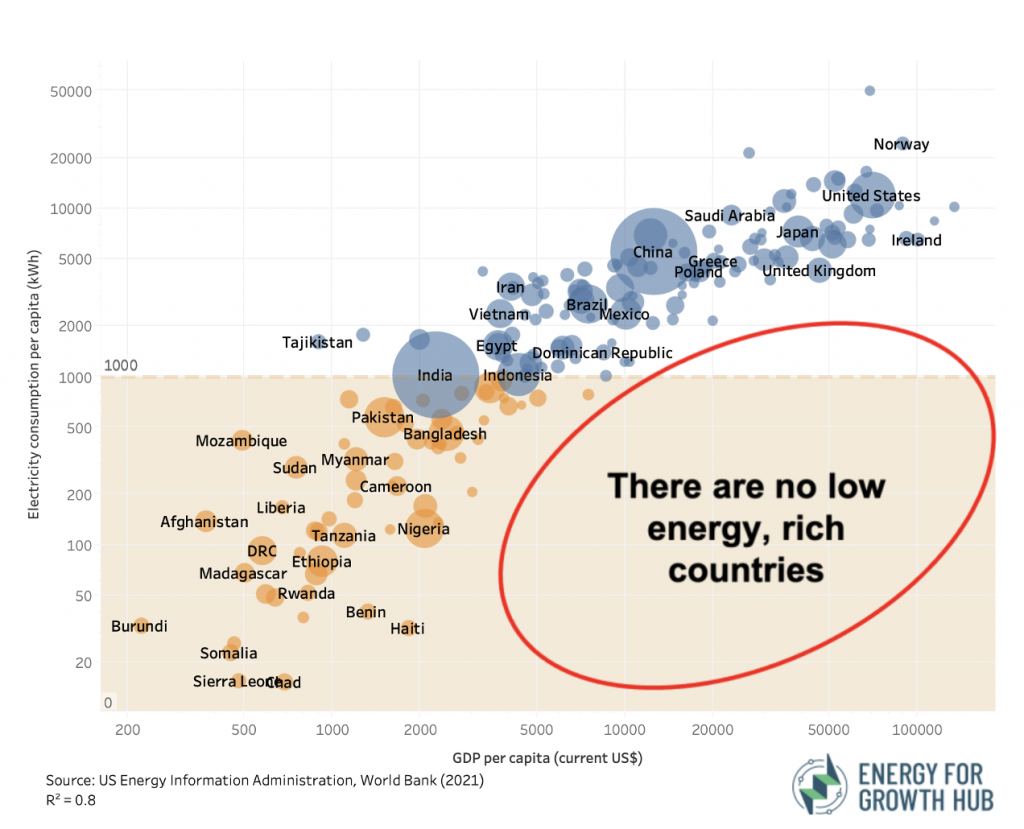
Why the constant redefinition? Because the Pope doesn't understand basic economics. Lack of access to energy is not a "sign" of poverty, it is the cause of poverty. Cheap energy is the gateway to wealth. If you do not have access to cheap energy, you will never be wealthy. Period. Mic drop. 

Leo, if you want to get rid of poverty - if you seriously want that - then you should be fighting tooth and nail to get small modular nuclear reactors (SMR) into every impoverished country in the world.

Nuclear power is now a corporal work of mercy. But Leo is as the babes, he knows nothing of how poverty actually works or how it is actually remediated.


Poverty Is Not Socially Defined, Part II

Because Leo doesn't undertand this, he doesn't realize that his assertion - poverty is socially defined - is fundamentally absurd. The most severe form of poverty, the deprivation of life itself, is the baseline for poverty. That baseline perdures regardless of century or social culture. A person needs a basic amount of food (2100 calories, plus vitamin and mineral micronutrients) and water to live, period. That minimum amount of food and water is an  unchanging constant around the globe and across all the endless centuries. Food, water, life - this isn't hard. It isn't complicated. The criteria match across past, present and future.

So, let us use that baseline as the starting point for comparison. Life expectancy in the 1st century AD Middle East was generally low, averaging between 20 and 35 years at birth. 90% of the population died before they turned 55 or 60. Today, life expectancy in the same geographic region of the world is 77 to 80. 

Wow. That doesn't help Leo's case at all.

Well, let's take a different tack. Let's look at how much labor it takes to avoid starvation. A first-century Middle Eastern peasant engaged in subsistence farming, that is, engaged in enough labor to avoid starving to death, would need to work approximately 8 hours a day, at least 250 days per year: roughly 2000 hours per year. Today, to achieve that same goal (i.e., not starving to death), the Middle Eastern laborer would have to put in roughly 22 hours per week, or 1144 hours per year. 

Huh. 

Apparently, poverty ain't what it used to be. (link)


May be an image of map and text that says 'Extreme Poverty notlivingin extreme extremepoverty poverty The World as 100 People over last two centuries living poverty eAree OurWorld in Data Democracy 9notliving ina ademocracy 1860 Vaccination againal phtharia, poverty notliving inadenocracy ought stanus ademocracy 14not 1880 accinated 56living ademocracy Colonialism 1080 1840 86vaccinated 2015 1680 T20 Basic Education 83 have notattained 1500 1080 living nacolony 18940 680 4have attained educatian 1800 education Continent America 1960 16inEurope 1860 living acolny 1560 1000 Literacy 1080 3inAsia 1900 North 2000 8arenotable read Europe nAfrica 1880 read Child Mortality 5years life 1080 2000 mad INESCOfer survivet yearsa life Zemures 2000 yearso online'

And that forms the basis for Leo's dilemma. He MUST insist that poverty is socially defined, because if he doesn't, he would have to admit the truth: by first century standards, no one in the world today is poor. Even the poorest person today works only half as hard for survival-level rations. Worse, there is no more smallpox, rinderpest or polio. Leprosy is essentially unknown and easily treated when it does pop up. Malnutrition and famine are now created by malevolent or inept politicians, not by plague, locust or bad weather. We have become so wealthy around the globe, that poverty is now really just something politicians choose to inflict on populations by enforcing inept governmental policies.

Jesus was wrong about the mustard seed being "the smallest of all seeds." Similarly, if we judged physical poverty according to the standards of the world Jesus lived and preached in, then Jesus was also wrong about the poor always being with us. The poor, by His definition, are literally gone, disappeared, poof! no longer available for scrutiny. We don't have any Jesus-level poor with us anywhere and we haven't had for centuries. Obviously, that is decidedly not an acceptable conclusion.  

This change in poverty began around 1800, when 

the proportion of America’s population living below India’s poverty line was roughly as high then as it is in India today. The period 1850-1929 saw the poverty rate fall by some 20 percentage points. The US saw great progress against extreme poverty in this period. A few people have asked me for more details. Here they are, also extending the calculations to other rich countries.

Works of Mercy vs. Work of Politicians

Keep in mind, India and China together have a population greater than the rest of the world combined, so when the Indian and Chinese politicians substantially eliminated extreme poverty in their own nations, that was a near-miraculous change. Literally billions of people no longer live on the edge of starvation (link to maps).


But, this enormous, earth-shattering leap goes completely unremarked in Leo's exhortation. Instead, we get this:

27. For this reason, works of mercy are recommended as a sign of the authenticity of worship,

Sure. But what are these works of mercy? "Literally half of the work of the Church [the corporal works of mercy] is either already irrelevant or on the verge of being rendered irrelevant." Given that the Chinese atheist citizens and the pagan Hindus were the ones who wiped out extreme poverty for billions of their own fellow citizens, does that mean the people who participate in Hindu pagan rituals or Communist party jamborees are engaged in authentic worship? After all, how can bringing billions of people out of poverty not be a work of mercy?


Ignoring Other Causes of Poverty

But it gets worse. Seriously worse. In first-world populations, poverty is overwhelmingly generated by single mothers: women who have chosen to divorce their husbands (80% of the time) or who never bothered to marry their baby-daddy. [1,2,3] And just as politicians are now the major creators of general poverty, this single-mother poverty has largely been created by the Church itself. After all, as Pope Leo inadvertently points out, the Church has actively worked to destroy the very families She claims to desire:

71. Many female congregations were protagonists of this pedagogical revolution. Founded in the eighteenth and nineteenth centuries, the Ursulines, the Sisters of the Company of Mary Our Lady, the Maestre Pie and many others, stepped into the spaces where the state was absent. They created schools in small villages, suburbs and working-class neighborhoods. In particular, the education of girls became a priority. [emphasis added, barely]

Apparently, the Popes do not realize that educating women destroys total fertility rates and family formation. [cf., for instance: 12, 3, 4, 5] The very thing the Pope celebrates in his first apostolic exhortation, female education, delays the formation, or destroys the stability, of the family, the "original cell of social life" (CCC 2207), thereby creating the very poverty that very same Pope excoriates. 

Higher female education correlates with later marriage. Educated women have higher divorce rates. Educated women tend to have fewer children. Why? Well, because educated women improve child health/education outcomes. Fewer children die in infancy, so infant mortality falls. High infant mortality encourages high fertility rates, while low infant mortality removes the woman's felt need to have multiple children. [1, 2, 3, 4]

TLDR: if you want lots of large families with low divorce rates, you should not be educating women. These are two contradictory goals.**

And this problem is not limited to first-world countries. Oddly enough, though the UN recognizes single mothers as a cause of global poverty, stating:

Single mothers are particularly vulnerable in this respect and are over-represented in poverty statistics.

the Pope says nothing. Sub-Saharan Africa has the highest poverty rate in the world, with 19 of the 20 poorest countries found in that region. It is essentially the last major area in the world that still suffers from extreme poverty. According to UNICEF (2022), and Gallup,about 32% of the children in sub-Saharan Africa live with a single mother, the highest rate in the world. The children of Africa's single mothers are 1.7–1.8 times more likely to experience stunting and 1.3 to 2.6 times more likely to die before the reach five years of age. Between 25% and 35% of Sub-Saharan poverty incidence is correlated with single-mother household structures. 

Yet, despite the lived testimony of literally every nation on earth concerning this major source of poverty, Pope Leo is completely silent on the subject of single-mother families.  Not even a hint of this can be found in his apostolic exhortation. [1, 2, 3, 4, 5, 6]

Instead, Pope Leo moves on from these early logical contradictions and an absolutely stunning silence about the problem of single motherhood, and turns instead to spouting outright fabrications: 

90. The bishops stated forcefully that the Church, to be fully faithful to her vocation, must not only share the condition of the poor, but also stand at their side and work actively for their integral development. Faced with a situation of worsening poverty in Latin America, [emphasis added] the Puebla Conference confirmed the Medellín decision in favor of a frank and prophetic option for the poor and described structures of injustice as a “social sin.”

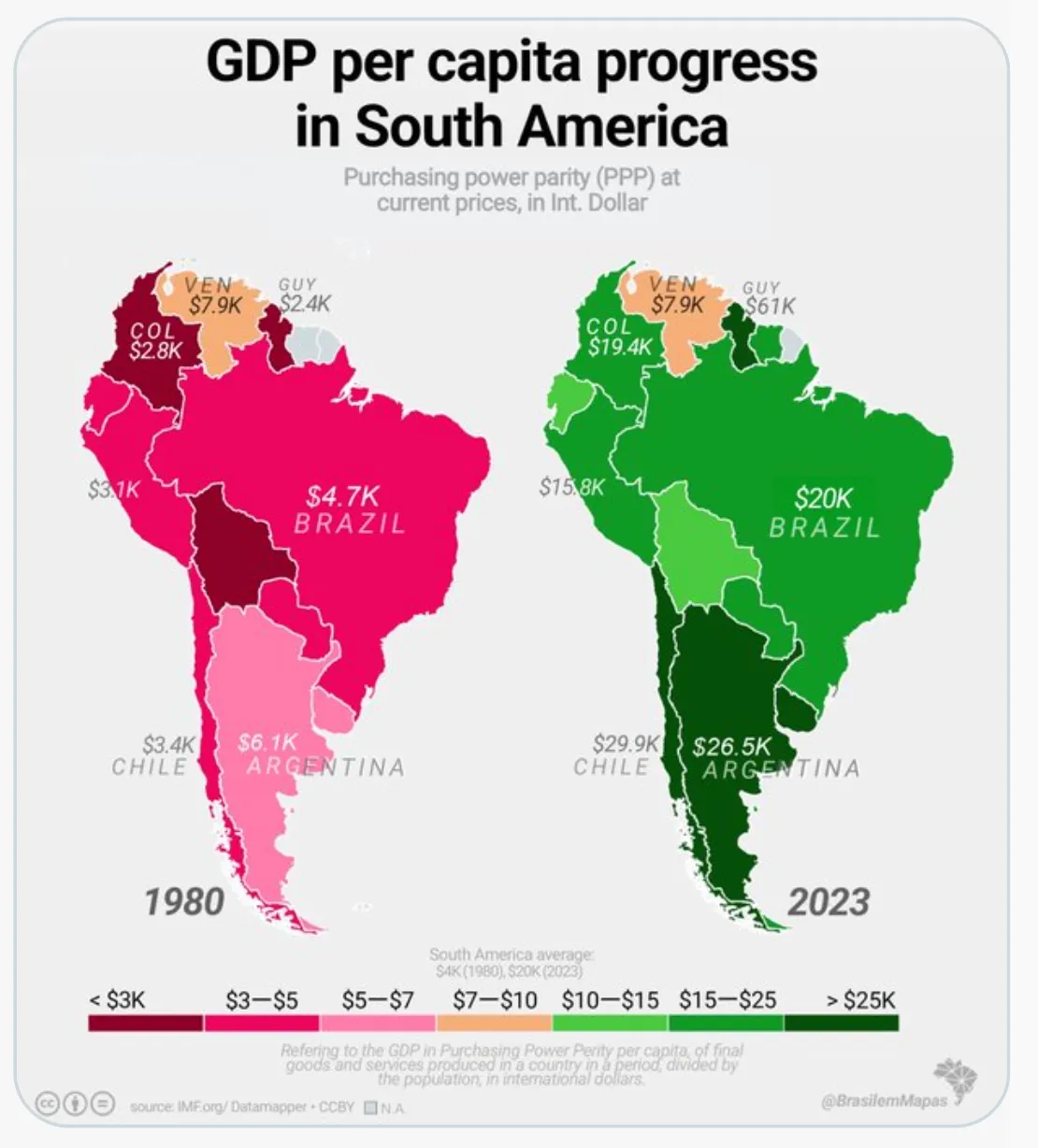
The Puebla Conference was held in 1979, over 45 years ago. While poverty may have been worsening in 1979, during a world-wide economic crisis, that crisis is also long-since past. Invoking it now, as if it were a real present danger, is simply a bald-faced lie. This is how poverty has changed since 1980. Maybe the Pope hasn't heard.
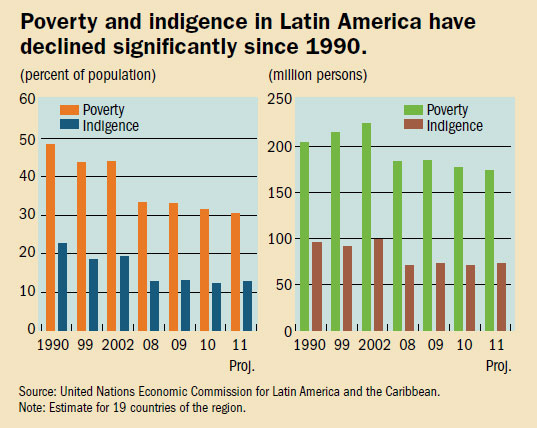
Poverty and indigence in Latin America have declined significantly since 1990.

Now, you might argue that the Pope was just bringing forward an older example of a "structure of sin" created by injustice. But, for that to be true, he would have to demonstrate that the 1979 global economic crisis was intentional. That case is not made. 1979, the year of the Nicaraguan revolution, was not a good year for anyone. Exactly what "structure of sin" did the Pope or the bishops claim to have discovered? We never find out.


Nor does he mention how this whole social "structure" thing works. If those same people were later brought out of poverty, did they emerge due to a "structure of virtue"? If so, none of the bishops or Popes mention it. Which is strange, given the advances made against global poverty in the last 50 years. If poverty has decreased, doesn't that speak to increasing "structures of virtue" around the world? Shouldn't Pope Leo be lauding the good where it can be found


You would think there would be room to praise the economic decisions and systems which have cut poverty to the bone. Instead, we get this: 

92. We must continue, then, to denounce the “dictatorship of an economy that kills,” and to recognize that “while the earnings of a minority are growing exponentially, so too is the gap [emphasis added] separating the majority from the prosperity enjoyed by those happy few. This imbalance is the result of ideologies that defend the absolute autonomy of the marketplace and financial speculation...
95. As it is, “the current model, with its emphasis on success and self-reliance, does not appear to favor an investment in efforts to help the slow, the weak or the less talented to find opportunities in life.” [100]

One might ask if educating women necessarily teaches women an "emphasis on success and self-reliance", but let us pass by this question and address the new point Pope Leo has raised. The Pope complains of a growing gap between the rich and the poor. He seems  completely oblivious to the growing gap between his "poverty porn" fantasy and the actual world his increasingly un-impoverished people inhabit: 

Extreme poverty isn't natural, it's created — Jason Hickel

What caused this extraordinary drop in the number of people experiencing extreme poverty? Hint: it wasn't the Catholic Church. Yet the Pope seems not only completely oblivious to this obliteration of extreme poverty, he actively denies the processes we know do help the poor:

114.  At times, pseudo-scientific data are invoked to support the claim that a free market economy will automatically solve the problem of poverty.

Notice: the papal claim lacks any footnote supporting his bald assertion. But how could he support his claim? What Pope Leo asserts is simply false. Poverty has dropped dramatically, that is simply beyond question. It was and is free-market capitalism, and the legal structures which favor the protection of private property, which lifted the poor from their poverty. World Bank data estimates that land titling programs in Latin America increased household incomes by 20-50% for participants. [cf., 1, 2, 3, 4: 

"Without land tenure systems that work, economies risk missing the foundation for sustainable growth, threatening the livelihoods of the poor and vulnerable the most. It is simply not possible to end poverty and boost shared prosperity without making serious progress on land and property rights."

And keep in mind, not only is the Pope denying lived reality, he is arguably and actively contradicting Scripture, the Divine Word itself. After all, even the Apostles recognized the right to private property:

While it remained unsold, did it not remain your own? And after it was sold, was it not under your control? Why is it that you have conceived this deed in your heart? You have not lied to men, but to God. (Acts 5:4

Notice, Peter did not take the line Leo takes. Peter did not chastise Ananias and Sapphira for having private property. Peter did not chastise either of them for refusing to share their private property with the community's poor. 

Instead, Peter, the first Pope, expressly recognized  and affirmed their right to do with their own property whatever they chose. At no point did he say that they sinned by refusing to share their wealth. Rather, Peter insisted their sin lay in pretense: they shared only a small portion of their wealth while pretending to have given everything. Their sin was in lying, not in refusing to give what they had to the poor.

How is it that neither Popes Leo nor Francis, nor even St. John Chrysostom, references this very telling passage when they discuss the plight of the poor and the duties of the wealthy?  

Now, is poverty a problem? Certainly. Roughly 9% of the world still lives in extreme poverty, defined as a significant risk of starving to death. We must continue to work to end this. But this extreme poverty is largely the result of legal structures which do not protect private property, economies which are not built around capitalism, women who refuse to stay married to the father of their children, and government officials who do not enforce laws on private ownership, thus preventing the poor from protecting anything that they may manage to accumulate. Where private property laws are strong, poverty disappears. Where laws are weak, or weakly enforced, poverty grows. The Pope has no memory of these things. To whom can he appeal for succor?

Of all the saints who understand the need to protect the poor, and the importance of staying married to her husband, certainly the Blessed Virgin figures most prominently. Why then, does this Pope, alone among all the popes in the last several centuries, refrain from referencing the Blessed Virgin Mary in his closing panegyric on the poor? 

You will search in vain through the apostolic exhortations and encyclicals of the previous several centuries for a papal document that closes without referencing or invoking the Blessed Virgin. The only such document that comes to mind is Mit Brennende Sorge. Pope Leo has now added his very first apostolic exhortation to this very short list of papal documents with BVM-free closings.

Which is sad. After all, doesn't that reflect in him a certain.... shall we say... poverty?


**And the goals are contradictory in part because the Church absolutely refuses to teach 1 Timothy 2:15. When discussing marriage, poverty and parents, Christianity calls on men to die for their wives. Men mostly do. But Christ apparently does not demand that women die for their husbands or children, so women mostly don't. Scripture says "a woman will be saved by the bearing of children", but absolutely no Catholic since the fourth century has invoked 1 Timothy 2:15. Both the Council of Trent's Catechism and the Universal Catechism of the Catholic Church studiously avoid mentioning that women are saved through the bearing of children (although both catechisms take pains to tell men that men need to die). Similarly, John Paul II's badly mis-named "Theology of the Body" discusses Ephesians 5:25 extensively while remaining totally, conspicuously, even suspiciously silent on 1 Timothy 2:15. You would think a theology of the body and human sexuality would somehow find time to mention how Scripture explicitly says a women's eternal salvation and everlasting communion with God is built around her having children via sex, but you would be wrong.

Well, what about Mulieris Dignitatem, on the Role and Dignity of Women? No.... no... try again...

How about the Second Vatican Council, especially its section on the Laity? Ahhh.... no, we're fresh out.

Absolutely no one... and I mean NO ONE... since Augustine and Chrysostom talks about 1 Timothy 2:15.

But the Catholic Church is the finest Scripture shop in the district.